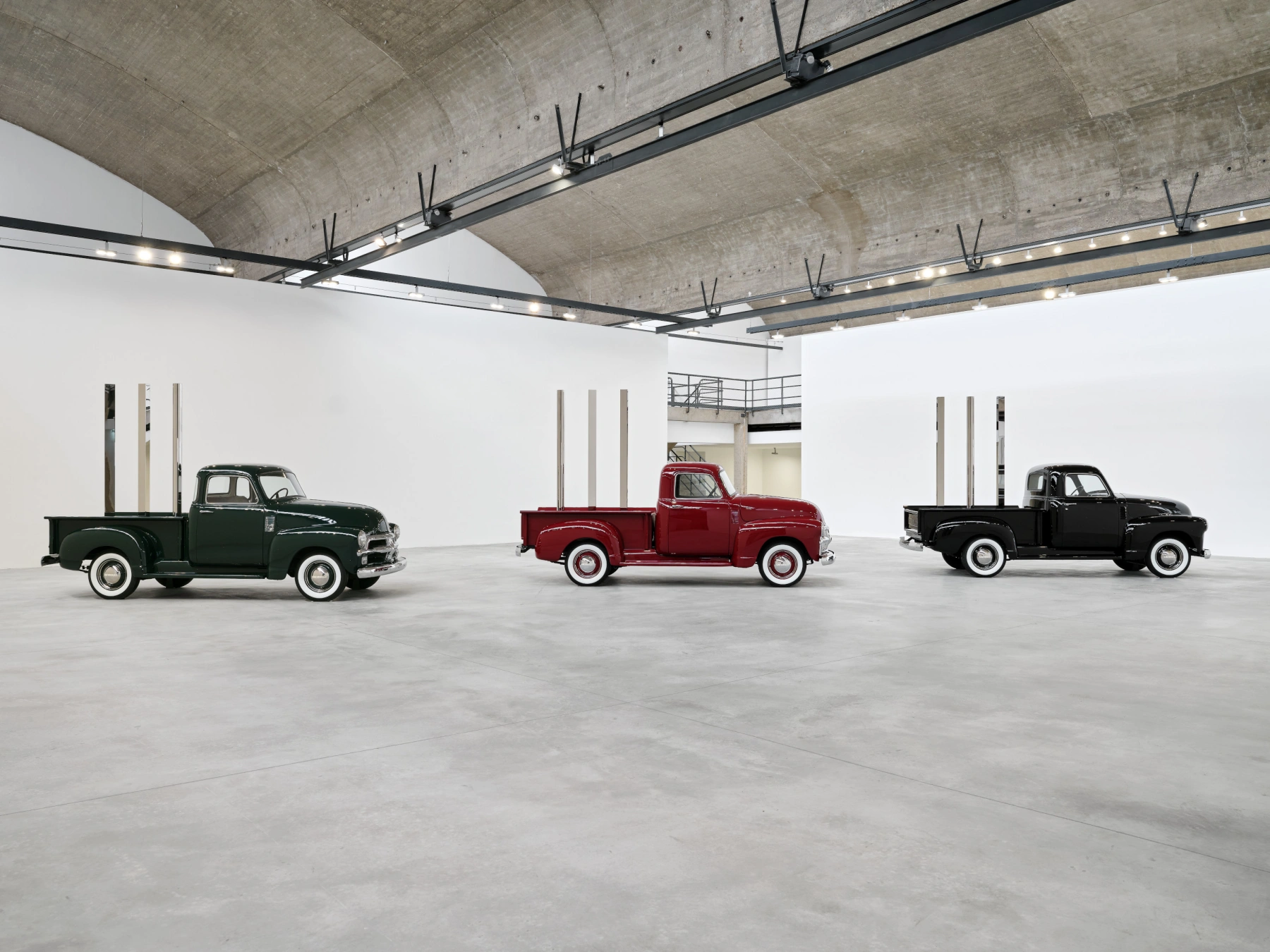
Truck Trilogy, the final sculpture by Walter De Maria, is presented outside the United States for the first time at Gagosian’s Le Bourget gallery, opening on October 19 the month that would have marked the artist’s ninetieth birthday. The exhibition offers a focused view of the late phase of De Maria’s career.
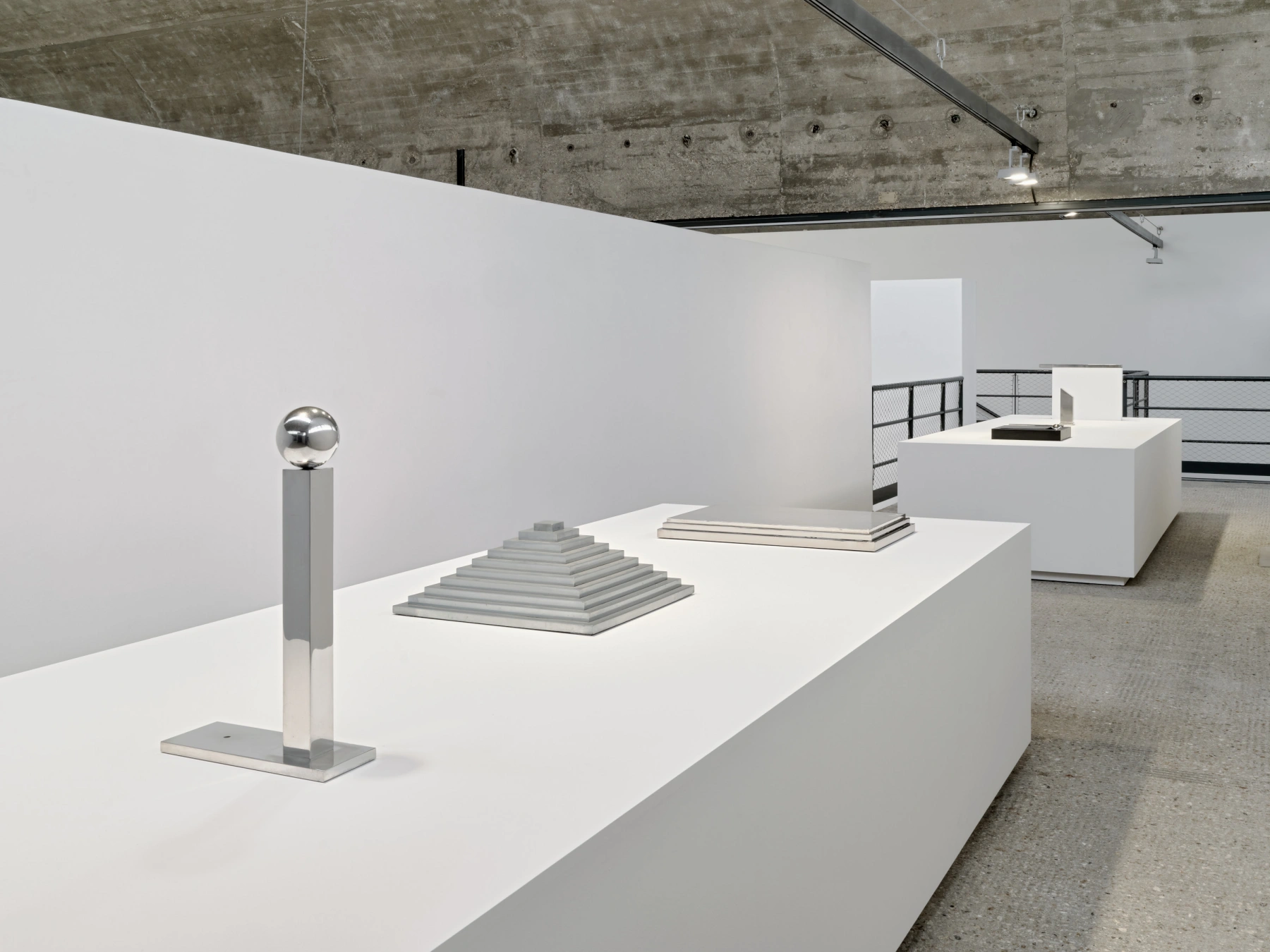
Previously shown only at Dia Beacon from 2017 to 2019, Truck Trilogy is exhibited alongside rarely seen sculptures, drawings, films, and archival materials. Titled The Singular Experience, the exhibition is curated by Donna De Salvo, senior adjunct curator at Dia Art Foundation. The foundation commissions, maintains, and manages access to De Maria’s permanent installations, including The Lightning Field (1977), The Broken Kilometer (1979), The New York Earth Room (1977), and The Vertical Earth Kilometer (1977).
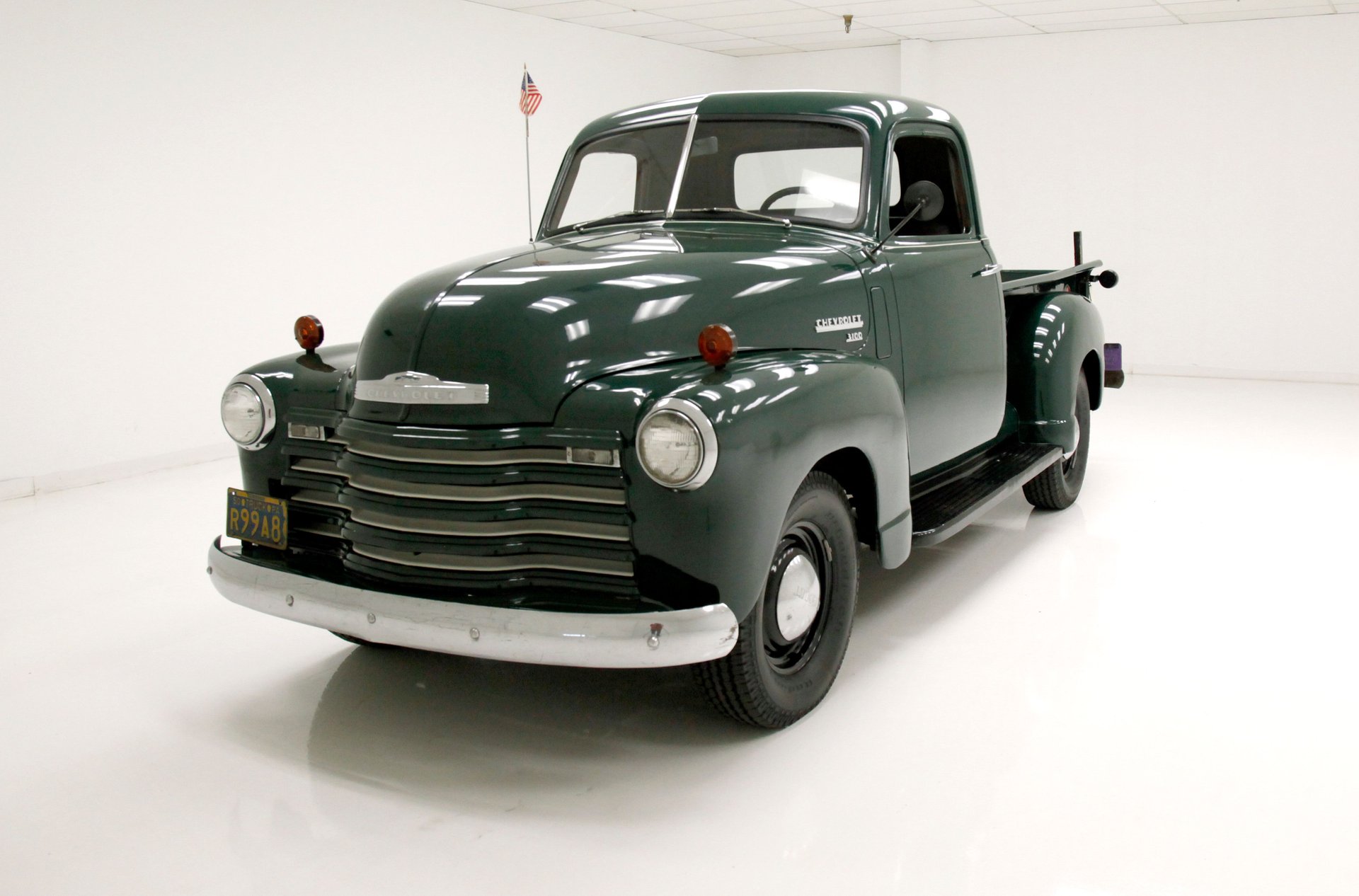
Conceived in 2011 and completed posthumously in 2017 according to the artist’s precise instructions, the work comprises three Chevrolet Advance Design 3100 pickup trucks iconic models produced between the late 1940s and mid-1950s, when De Maria was a young man.
Polished and stripped of all extraneous elements and function, the trucks are fitted with upright stainless-steel rods set into finished oak panel beds. Each vehicle is crowned with a distinct configuration of triangular, square, and circular rods, transforming utilitarian transport into geometric markers of reflection. At once industrial and metaphysical, austere and hallucinatory, Truck Trilogy condenses De Maria’s pursuit of uniting exact measurement with imagination.
The exhibition also includes 13, 14, 15 Meter Rows (1985), a floor sculpture composed of forty-two polished polygonal solid stainless-steel rods arranged horizontally in three rows, each successive row increasing by one meter in length. The work reflects De Maria’s fascination with mathematical sequences that generate visual harmony while simultaneously mirroring the viewer’s movement through space.
Trained as a percussionist, De Maria maintained a deep engagement with rhythm, frequency, and harmonic perception throughout his practice. In the 1960s, he was active in New York’s avant-garde music scene. As a founding member of The Druds, he collaborated with figures such as Andy Warhol, Jasper Johns, and La Monte Young. He later played drums with The Primitives, a group that would eventually become The Velvet Underground.
These musical and poetic qualities of meter and repetition resonate in the works at Le Bourget. Five sequential entries from 10 through 17-Sided Open Polygons (1984) heighten awareness of distance, angle, and the viewer’s physical presence.
Drawings such as the Invisible Flying Saucer series (1974), along with films including Hard Core (1969) and Three Circles and Two Lines in the Desert (1969), embody De Maria’s belief that “every work should have at least ten meanings.” Together, they underscore the breadth of a practice that was rigorous yet playful, systematic yet imaginative.
This duality also appears in De Maria’s public commission in Paris: Monument to the Bicentennial of the French Revolution 1789–1989 (1989–90), located near the Assemblée Nationale. Created to commemorate the bicentennial of the French Revolution, the granite sphere’s precise geometric base conceals an embedded 18-karat gold heart, revealing tenderness beneath calculated form.
Together with the concurrent exhibition Minimal at the Bourse de Commerce, curated by Dia Art Foundation director Jessica Morgan, the Le Bourget presentation offers a comprehensive perspective on De Maria beyond his categorization within Land Art or Minimalism.
As art critic David Bourdon once described, the exhibition foregrounds “the singular experience,” emphasizing a direct and unmediated relationship between viewer and artwork.
The exhibition is organized in collaboration with the Estate of Walter De Maria, with the support of Elizabeth Childress, director of the Walter De Maria Archive.