 Perrotin Los Angeles presents Takashi Murakami’s new solo exhibition, Hark Back to Ukiyo-e: Tracing Superflat to Japonisme’s Genesis. Inspired by a recent visit to Giverny, the artist explores the historical and aesthetic relationship between ukiyo-e and Impressionism through a suite of 24 new paintings.
In this exhibition, Murakami further develops a theory he has long articulated: that ukiyo-e, the Japanese “floating world” prints of the Edo period, played a transformative role in reshaping Western art in the late nineteenth century. In particular, he reflects on how Japanese landscape and figure prints encouraged Impressionist painters to adopt more subjective and abstract compositional approaches. Known for early sculptural works such as HIROPON and My Lonesome Cowboy, which challenged global perceptions of sexuality in Japanese art, Murakami now turns his attention to the global impact of bijinga ukiyo-e images of beautiful women.
Bijinga focused on female figures from the pleasure quarters of Edo (modern Tokyo), including courtesans, geisha, and teahouse attendants. Often celebrated public personalities of their time, these women were depicted in moments ranging from casual gestures to seasonal viewing rituals. Sensual details such as the slender nape of the neck, bare feet, languid poses, and meticulously rendered hairlines were central to their appeal. According to Murakami, these aesthetic devices did not remain confined to Japan. Artists such as Claude Monet and other Impressionists absorbed elements of ukiyo-e, including tilted ground planes, shallow pictorial space, silhouetted figures, bold areas of flat color, and curving outlines, integrating them into new depictions of modern life in France.
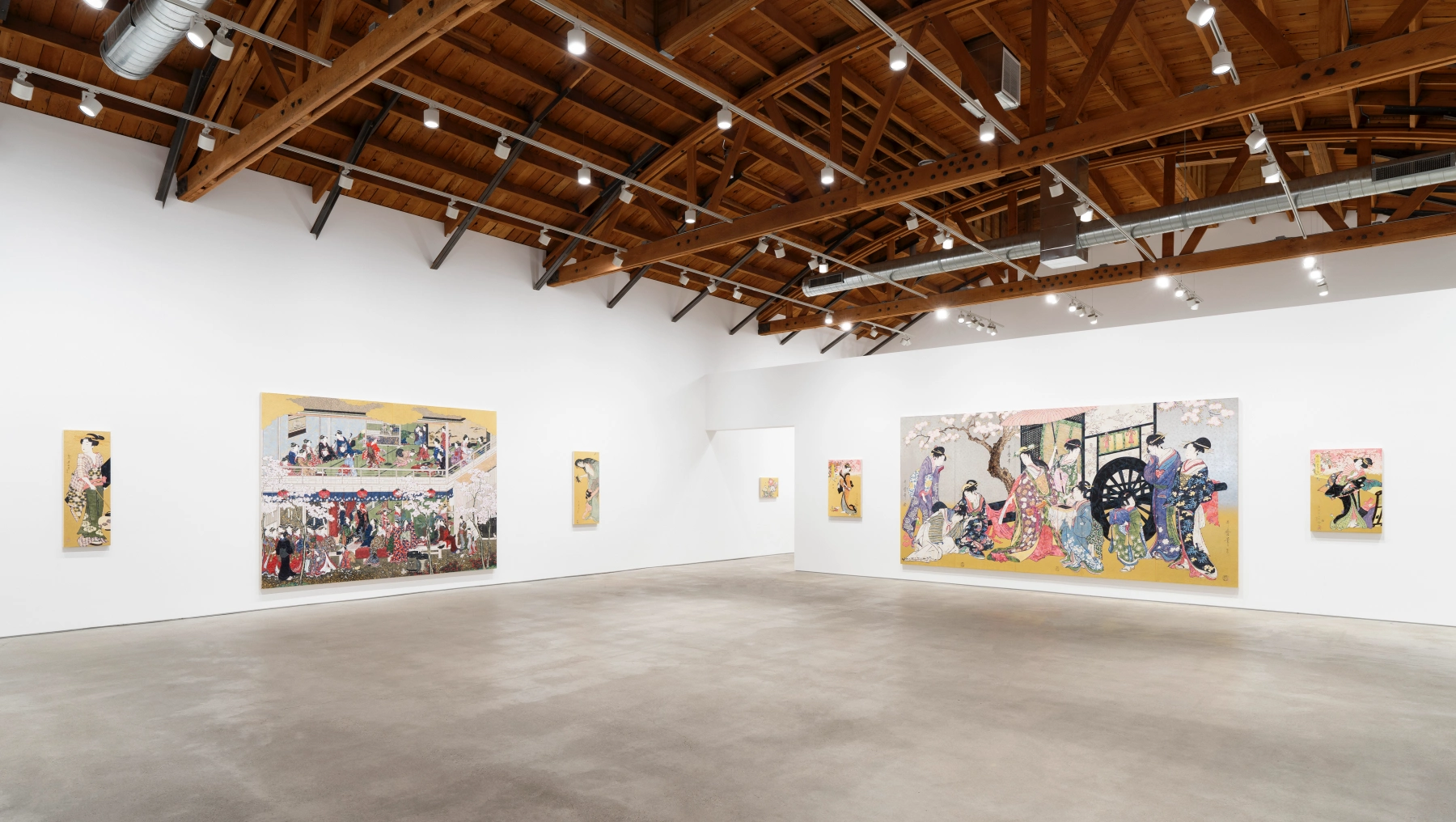
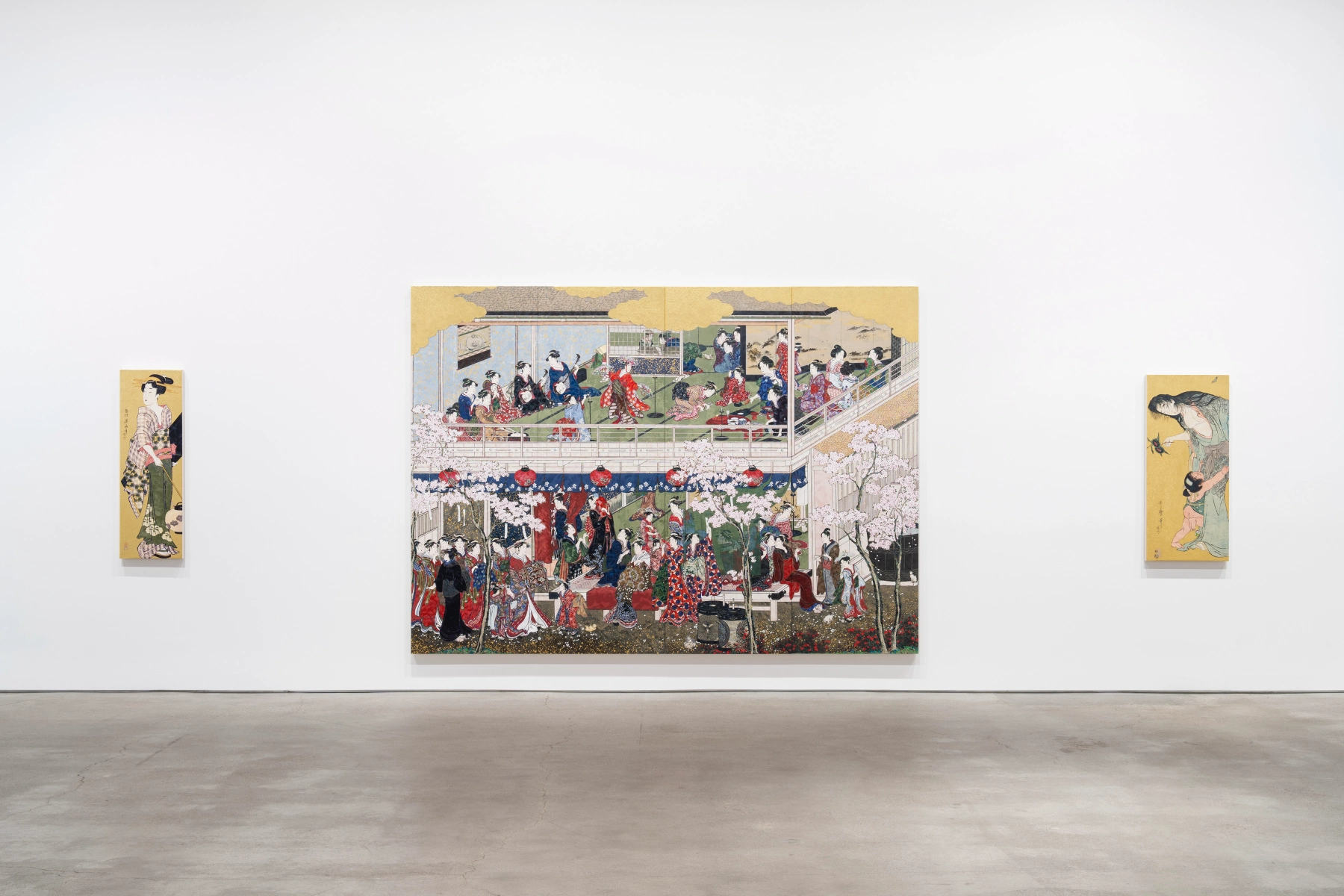
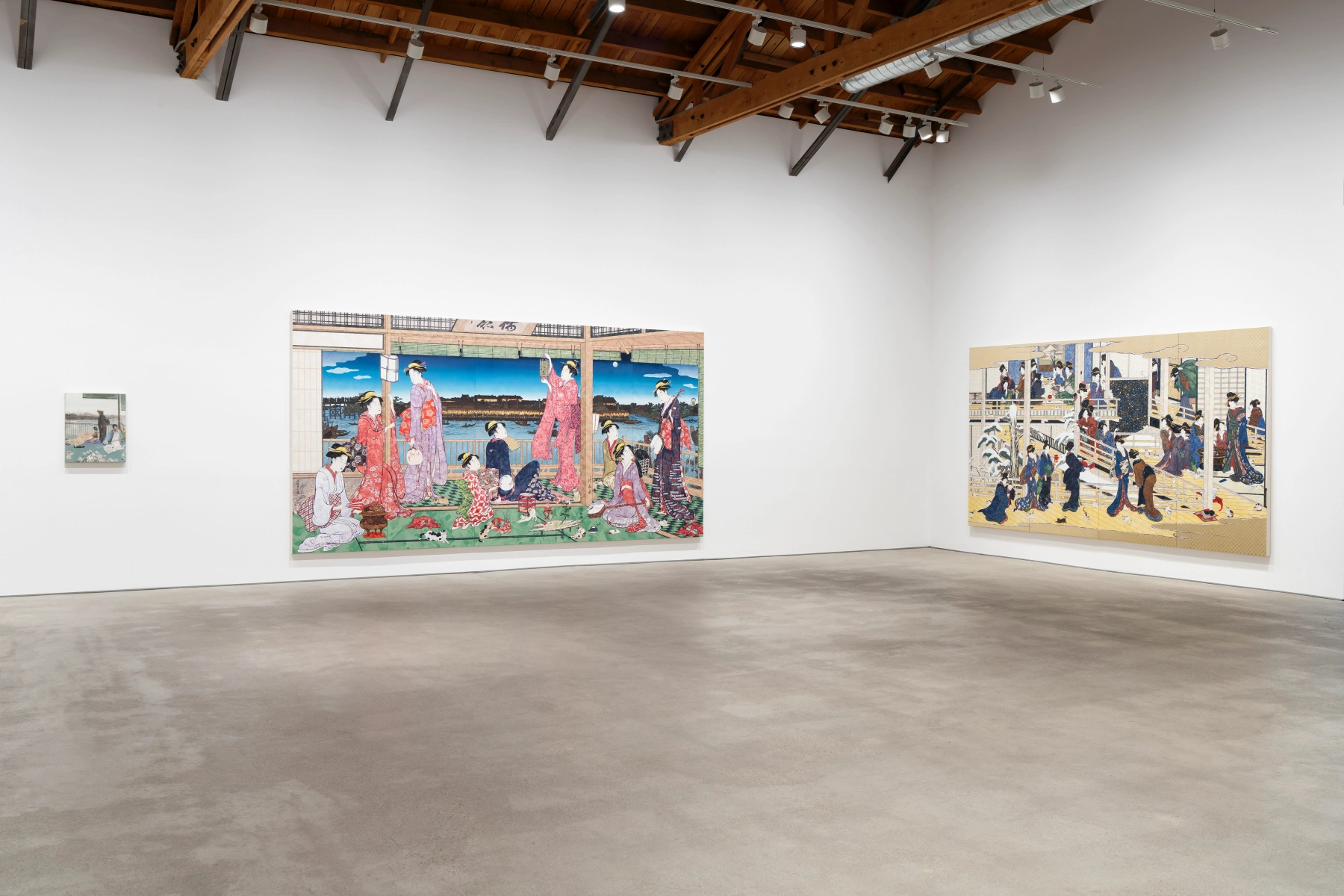
The exhibition opens with four monumental paintings that serve as an in-depth guide to Edo-era fashion and taste. Murakami reinterprets bijinga compositions by Kitagawa Utamaro and Torii Kiyonaga at an impressive scale of approximately two by four meters, preserving the grandeur of the originals. Utamaro’s celebrated scenes of women gathered in teahouses during spring and winter provide the foundation for these works. In the late nineteenth century, such paintings were held in Paris in the collection of Siegfried Bing, a key figure in the promotion of Japonisme; Monet may have encountered them firsthand.
Murakami’s technique remains distinctly his own. Layer upon layer of silkscreened acrylic paint is applied using a specialized squeegee method and finished with a glossy coating. This process both references the flatness and clarity of ukiyo-e and underscores his Superflat aesthetic.
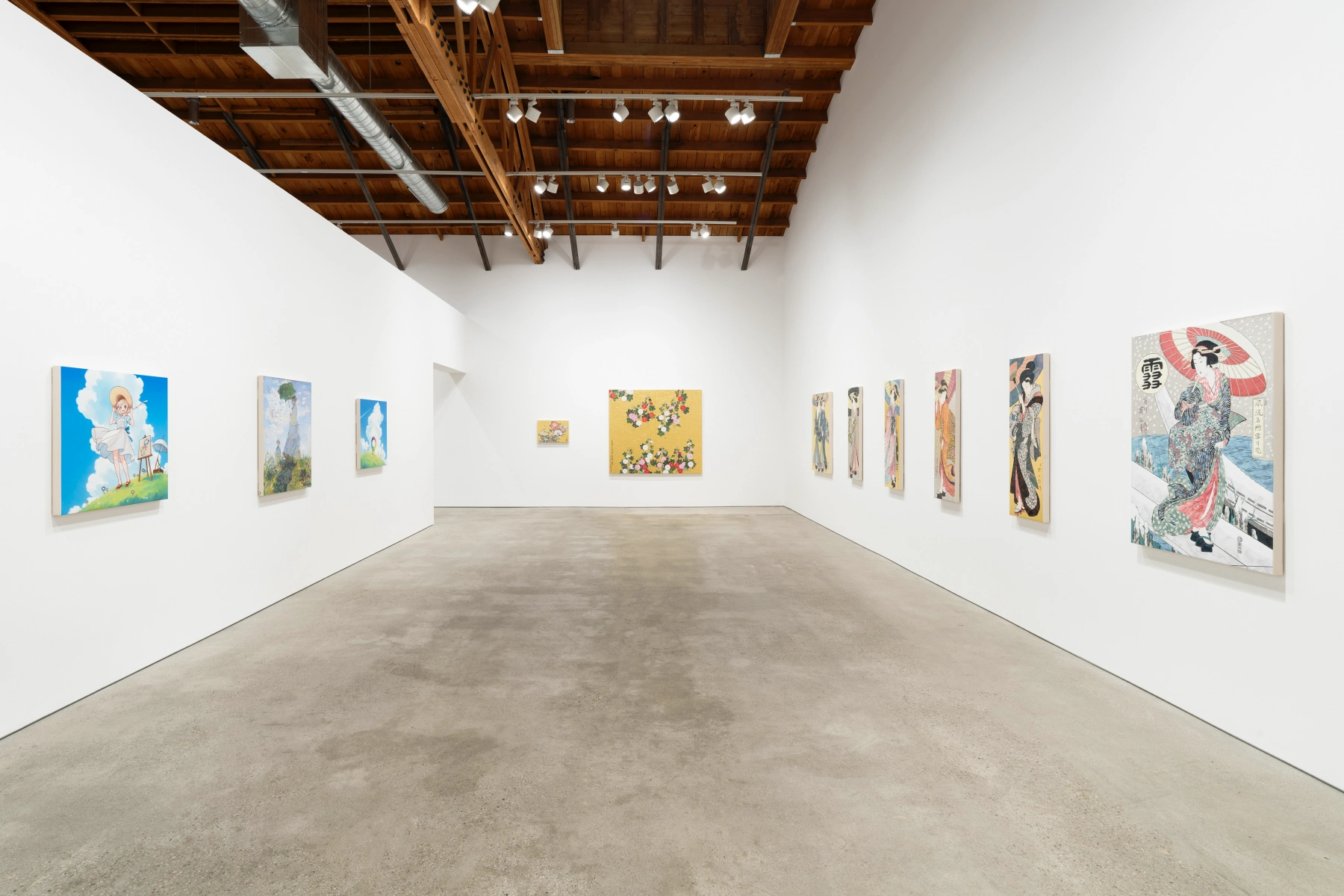
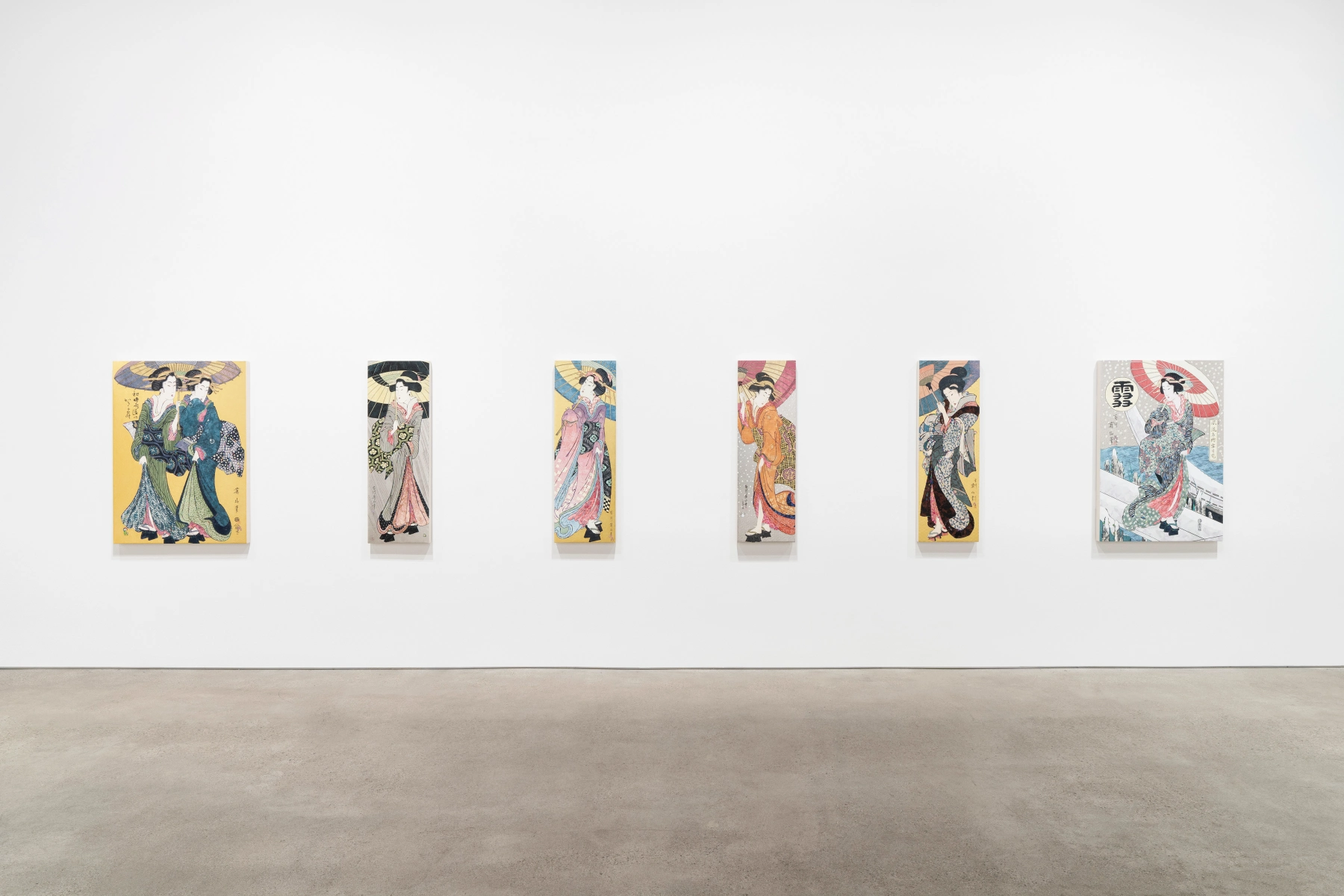
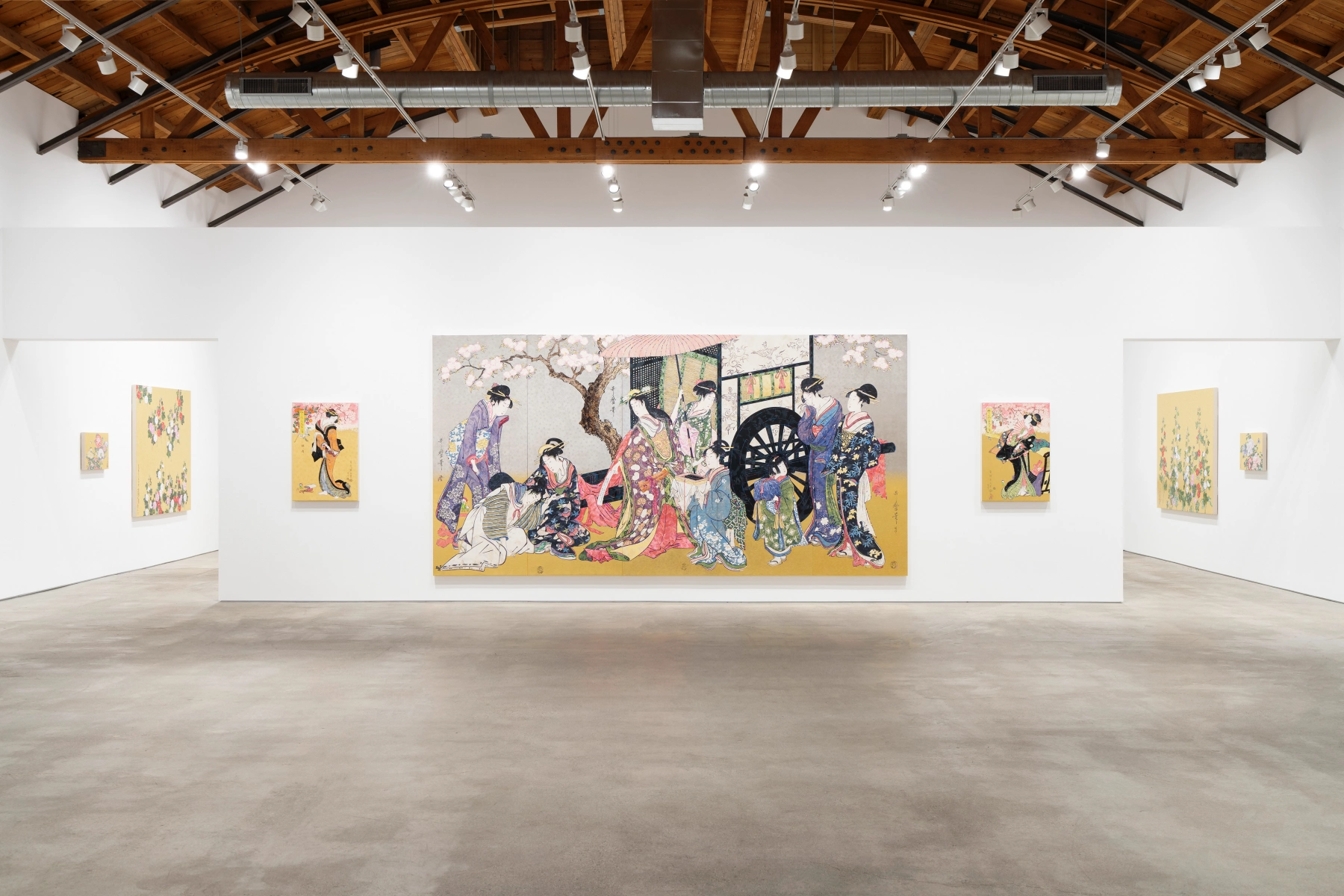
The second section of the exhibition draws a direct connection between bijinga and Monet’s 1875 painting Woman with a Parasol Madame Monet and Her Son. Murakami presents his own copy of Monet’s portrait alongside enlarged reproductions of ukiyo-e prints by Kikukawa Eizan and Utamaro. Through this juxtaposition, he constructs a visual narrative of Monet’s engagement with Japanese prints. Elements such as statuesque three-quarter figures, parasols viewed from below, windswept garments, and cloud-like masses of blossoms suggest compositional parallels. In Murakami’s reinterpretation, intricate squeegee patterns evoke the expressive brushwork and light-dappled surfaces characteristic of Impressionism.
The third section extends the dialogue from ukiyo-e and Monet to contemporary Japanese kawaii culture. Paintings derived from designs for the 2024 108 Flowers Revised trading card series, produced by Kaikai Kiki, draw inspiration from Hayao Miyazaki’s film The Wind Rises. Miyazaki’s depiction of the character Nahoko painting outdoors references Monet’s composition; Murakami reimagines this lineage by replacing Impressionist blossoms with his signature smiling flowers. Through this chain of visual influence ukiyo-e to Impressionism to anime Murakami highlights the continuity of aesthetic exchange across centuries.
The final segment of the exhibition revisits historical precedents for Murakami’s iconic floral motifs. References to flower prints by Hokusai and Hiroshige appear alongside works inspired by compositions from Rinpa school masters Ogata Korin and Ogata Kenzan. These connections trace the lineage of decorative floral imagery within Japanese art history and situate Murakami’s “happy flowers” within a longer tradition.
Murakami emphasizes that copying has long been central to artistic training in Japan. For him, revisiting and reproducing canonical works is not simply technical practice but a method of clarifying the chain of relationships linking ukiyo-e to modern abstraction. This sustained engagement with Edo-period art has defined much of his recent practice and has been evident in exhibitions at major institutions in the United States and Japan.
At Perrotin Los Angeles, Hark Back to Ukiyo-e: Tracing Superflat to Japonisme’s Genesis presents a focused examination of historical continuity, artistic transmission, and reinterpretation. By tracing a line from Edo-period prints to Impressionism and onward to contemporary visual culture, Murakami offers a measured and research-driven perspective on the enduring global influence of Japanese art.