Van Gogh’s Favorite Color: The Power of Yellow

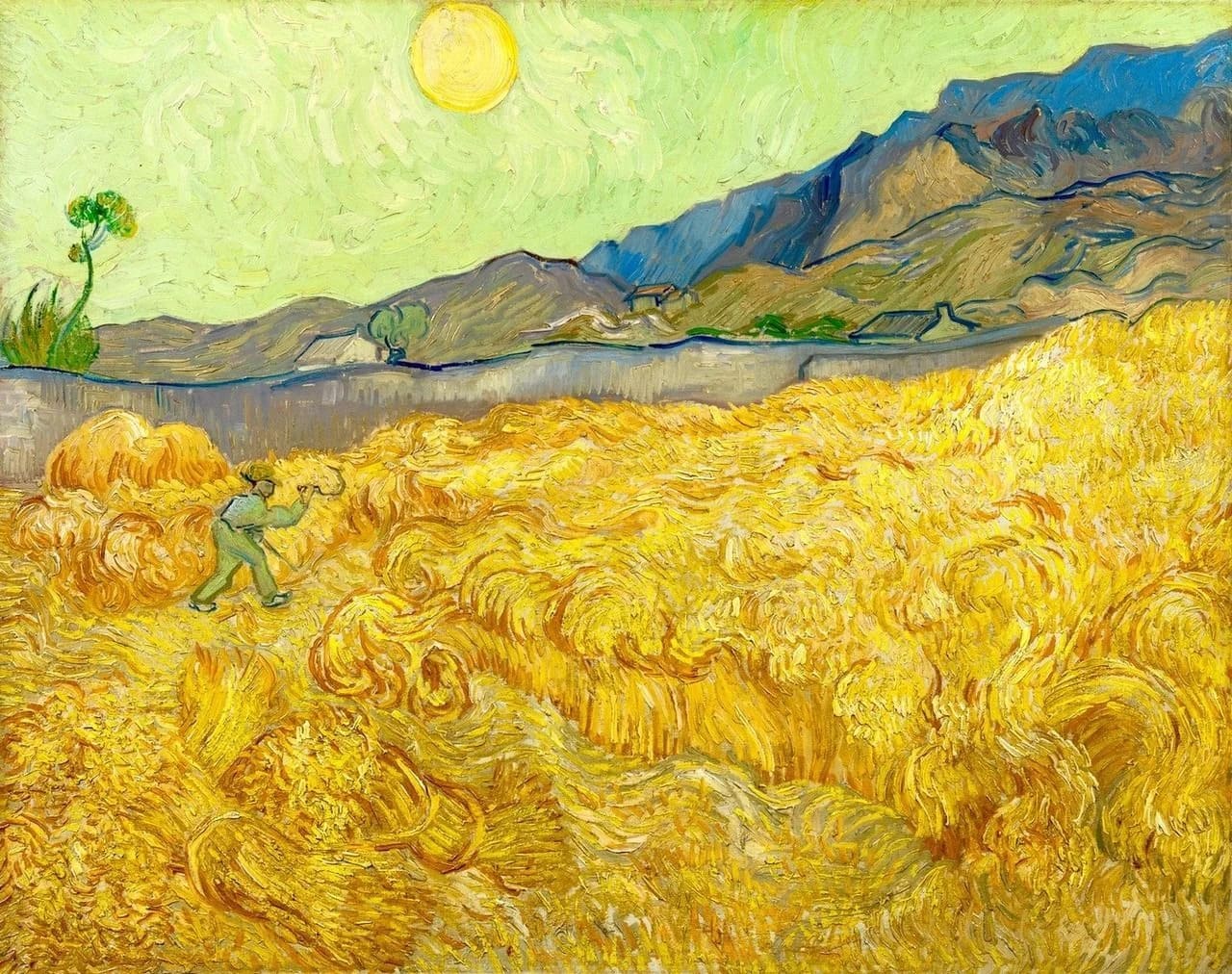
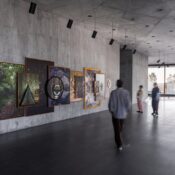
In 2026, the Van Gogh Museum presents a remarkable exhibition dedicated to one of the most iconic colors in art history: yellow. Titled “Yellow. Beyond Van Gogh’s Colour,” the show explores not only how Vincent van Gogh used yellow, but also how the color shaped artistic and cultural meanings in the late 19th and early 20th centuries.
In an 1888 letter to his brother Theo van Gogh, Van Gogh wrote:
“Sunshine, a light which, for want of a better word, I can only call yellow pale sulfur yellow, pale lemon, gold.”
This poetic description reveals how deeply the artist connected yellow with light, vitality, and emotional intensity.
Arles: Where Yellow Became Life
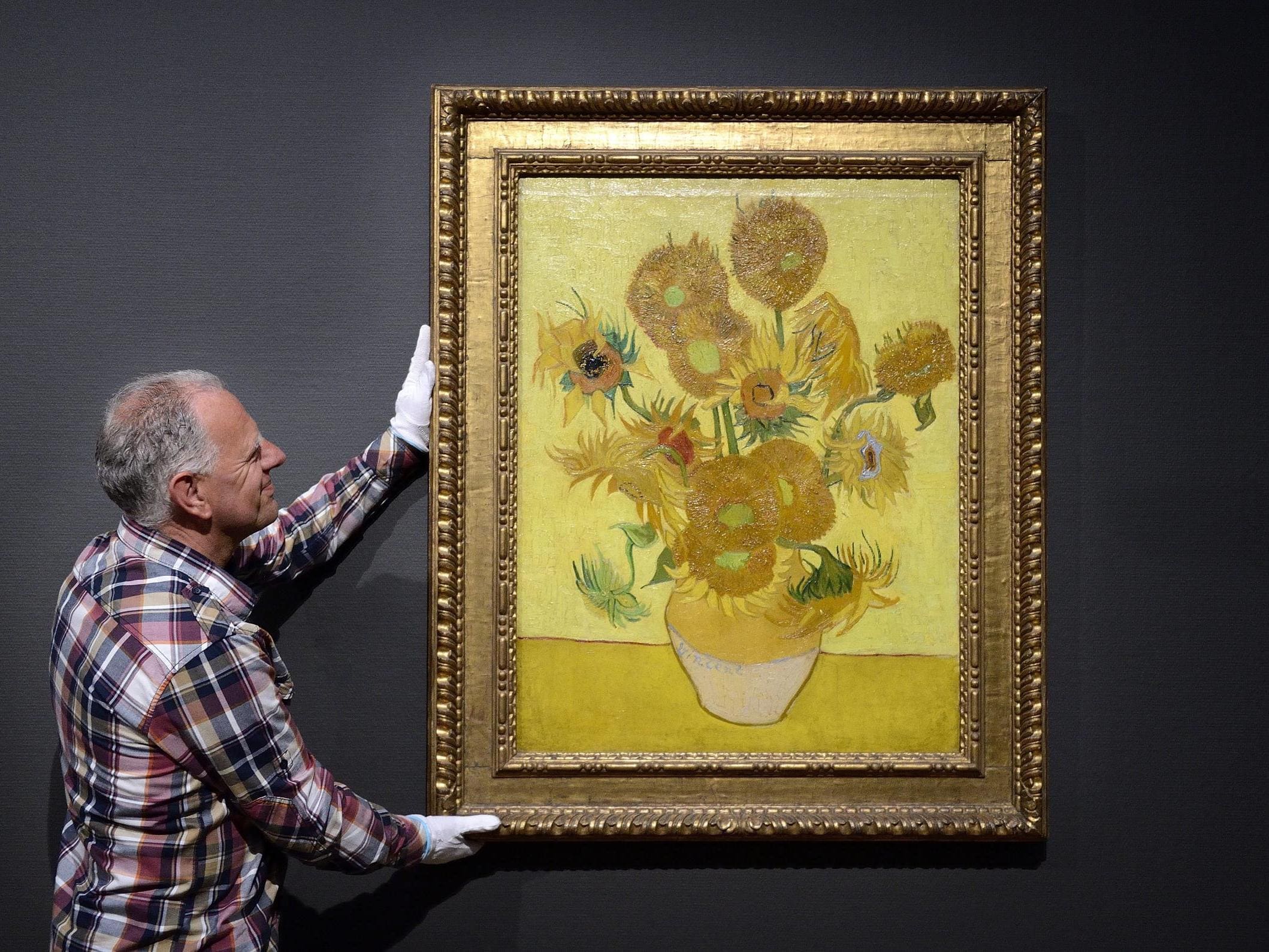
Van Gogh’s obsession with yellow reached its peak during his 15 months in Arles (1888–1889). The Provençal sunlight transformed his palette. His Sunflowers, expansive wheat fields, and even the straw hat in his self-portraits radiate golden tones. He famously lived in the “Yellow House,” painting both its exterior and his modest bedroom anchored by a bright yellow bed.
For Van Gogh, yellow symbolized life itself. According to the museum’s chief curator, the sun was a life giving force in his artistic vision. The dramatic contrast between blue skies and yellow buildings in Arles inspired him deeply he even described the challenge of capturing that contrast as something he wanted “to conquer.”
Art historian Martin Bailey calculated that between April 1888 and 1889, Van Gogh used over one-third of a large tube of yellow paint per canvas on average. Yellow was not an accent it was fundamental.
The Meaning of Yellow: Joy, Modernity, or Madness?
Yellow traditionally evokes warmth, optimism, and energy. Yet by the end of the 19th century, it also carried associations with decadence, moral decline, and even psychological instability.
One lesser-known work featured in the exhibition, Piles of French Novels, depicts books with striking yellow covers. At the time, such covers signaled provocative or socially controversial content often dealing with prostitution, alcoholism, and rapid social change. For contemporary viewers, the meaning would have been instantly recognizable.
Thus, Van Gogh’s yellow operates on multiple levels:
-
Universal meaning: sunlight, vitality, warmth
-
Cultural meaning: modernity, decadence, social transformation
His bold use of yellow was daring and confrontational perhaps even more so than red or blue.
Beyond Van Gogh: Yellow Across Art History

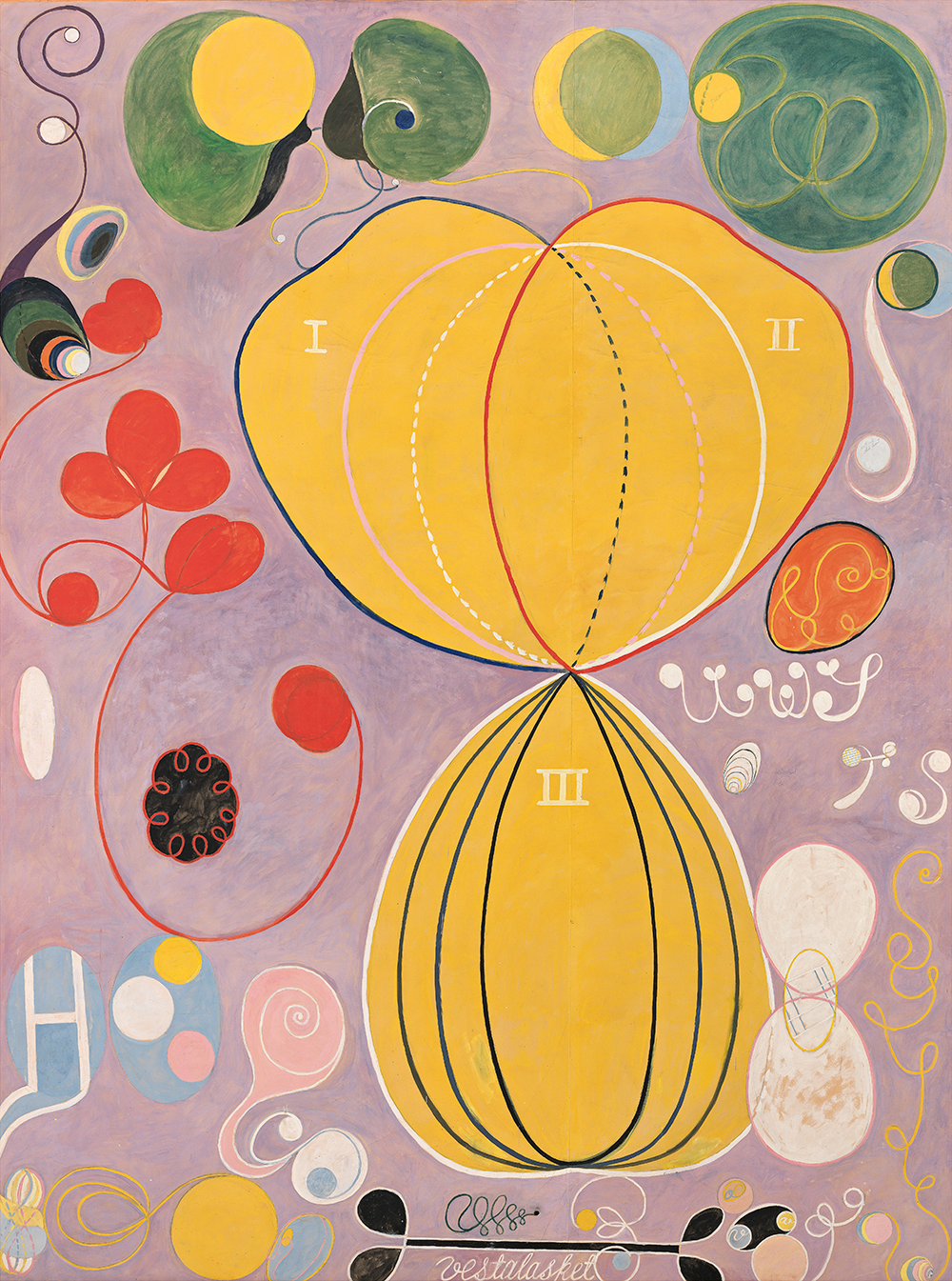
The exhibition expands the dialogue by including works from major artists across movements:
-
Marc Chagall
-
Wassily Kandinsky
-
Hilma af Klint
-
Paul Signac
-
Kazimir Malevich
-
J. M. W. Turner
Though separated by time and artistic movements, these artists demonstrate how yellow can represent spirituality, abstraction, light, and transcendence. The exhibition creates unexpected juxtapositions that encourage viewers to rethink color beyond stylistic boundaries.
Olafur Eliasson’s Yellow Light Experiment

Contemporary artist Olafur Eliasson extends the conversation into the present with Color Experiment No. 78.
He presents 72 circular monochromatic paintings illuminated by monofrequency yellow lamps. Under this light, viewers perceive only shades of yellow and black. The installation transforms color into a philosophical and perceptual experience, reminding us that color depends on light, context, and sensory interpretation.
Being immersed in a room of pure yellow light becomes intense almost overwhelming. As Eliasson states, “Yellow is like wow.”
The Science Behind Fading Yellows
In 2018, scientists discovered that one of the chrome yellow pigments used in Van Gogh’s Sunflowers is chemically unstable and gradually darkening. Research conducted by the University of Antwerp and Delft University of Technology confirmed that this transformation occurs extremely slowly.
Museums now implement careful lighting and conservation strategies to preserve the original vibrancy. Interestingly, curators selected bluish wall tones in this exhibition to enhance the brilliance of Van Gogh’s yellows, proving how display context shapes perception.
It raises a fascinating question: were Van Gogh’s yellows once even more luminous than what we see today?
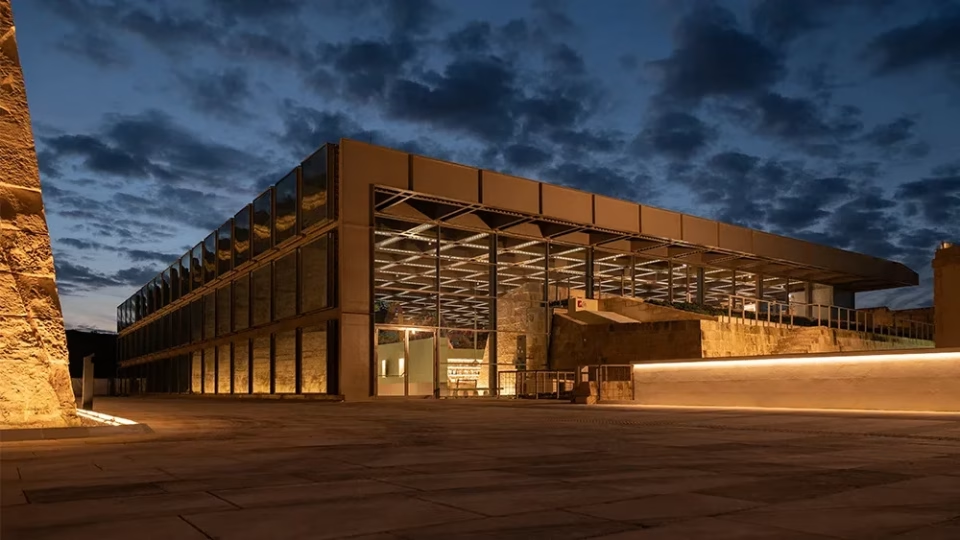
“Yellow. Beyond Van Gogh’s Colour” is on view at the Van Gogh Museum, Museumplein 6, 1071 DJ Amsterdam, Netherlands, February 13–May 17, 2026.
Conclusion: Why Yellow Still Matters?
Van Gogh’s yellow is more than pigment it is emotion, energy, life, and modernity. This exhibition demonstrates how a single color can define an artistic legacy while continuing to evolve in meaning across generations.
More than a tribute, “Yellow. Beyond Van Gogh’s Colour” is a powerful reminder that color itself can be the subject, the message, and the experience.
And for Van Gogh, that color will always be yellow.