
The Smithsonian American Women’s History Museum’s new augmented reality initiative, Unhidden Heroines, represents a significant shift in how national history is presented in public space. Installed across Washington D.C.’s National Mall, the project uses immersive AR technology to surface the stories of women whose contributions have historically been minimized, forgotten, or excluded from dominant historical narratives.
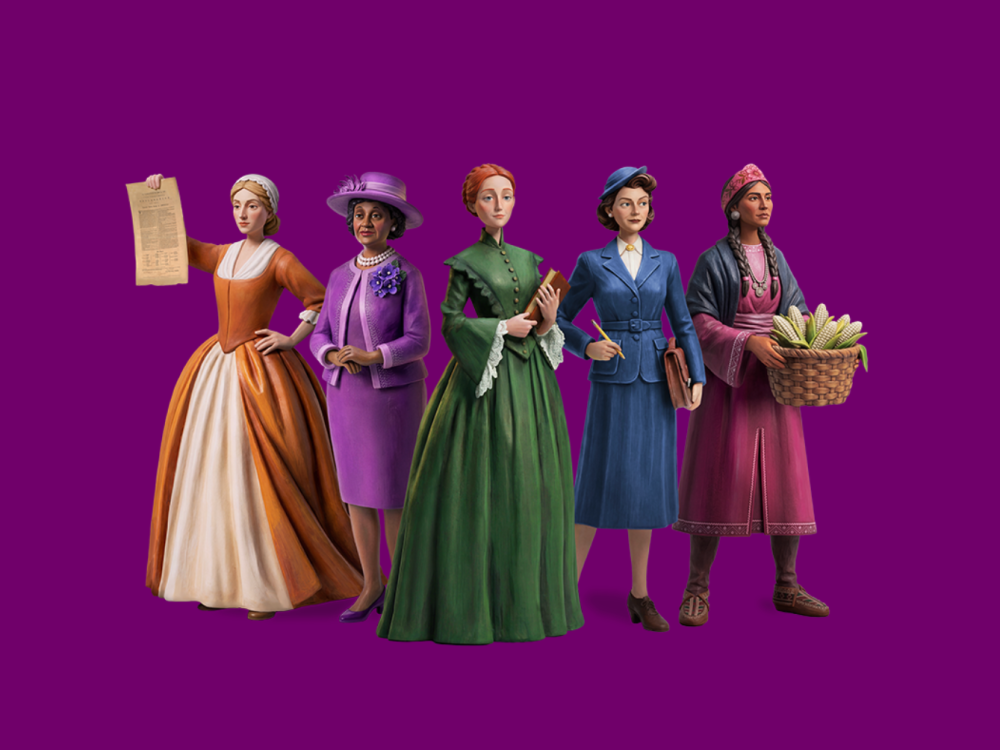
At its core, the project is not simply a digital exhibition but a reconfiguration of public memory. Visitors using mobile devices can access life-sized 3D representations of historical women positioned near iconic monuments. These figures are not static displays. They are designed as narrative agents, capable of speaking, recounting personal experiences, and contextualizing their impact within broader social and political movements.
The timing of the project is also significant. As the United States approaches its 250th anniversary, institutions like the Smithsonian are facing increased scrutiny regarding whose histories are commemorated in national spaces. The National Mall, often described as a symbolic “stage” of American identity, has traditionally centered male political and military figures. Unhidden Heroines disrupts this visual hierarchy by inserting women’s voices directly into that landscape.
What distinguishes this project from conventional museum exhibitions is its spatial integration. Rather than confining historical narratives within gallery walls, AR technology extends the museum experience into the physical environment. This creates a layered encounter between past and present, where historical interpretation becomes mobile, situational, and user-driven.
From a curatorial perspective, the project reflects a broader institutional movement toward participatory and inclusive historiography. The Smithsonian American Women’s History Museum has repeatedly emphasized that women’s contributions have often been underdocumented or fragmented across archives. AR becomes a corrective tool here, not by rewriting history, but by reassembling visibility in spaces where absence has been normalized.
However, the project also raises methodological questions. Digital reconstruction of historical figures inevitably involves interpretive choices. What is included, what is emphasized, and what remains silent are all shaped by curatorial and technological frameworks. This means that while AR enhances accessibility and engagement, it also introduces new layers of mediation between the viewer and historical truth.
Despite these complexities, Unhidden Heroines demonstrates how augmented reality can function as a cultural infrastructure rather than a novelty feature. It transforms public space into an interactive archive, where history is not only observed but actively encountered and questioned.
In this sense, the project signals a broader evolution in museum practice: from preservation and display toward activation and dialogue. The National Mall, long a site of monumental permanence, becomes a dynamic field of reinterpretation where overlooked narratives gain physical and symbolic presence.
Ultimately, Unhidden Heroines is less about technology itself and more about what technology makes visible. It challenges long-standing hierarchies of memory and invites a reconsideration of how national identity is constructed through space, storytelling, and representation.