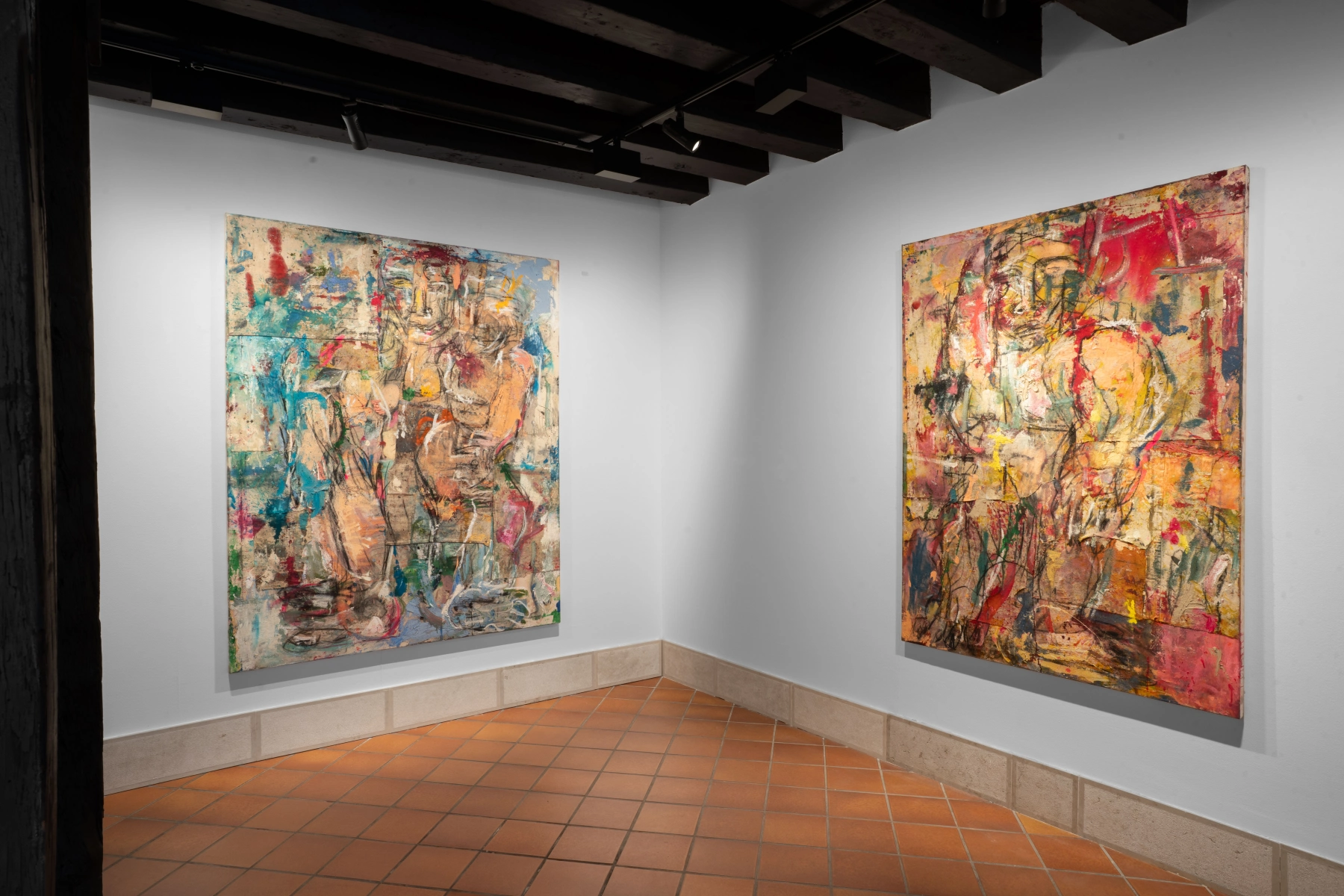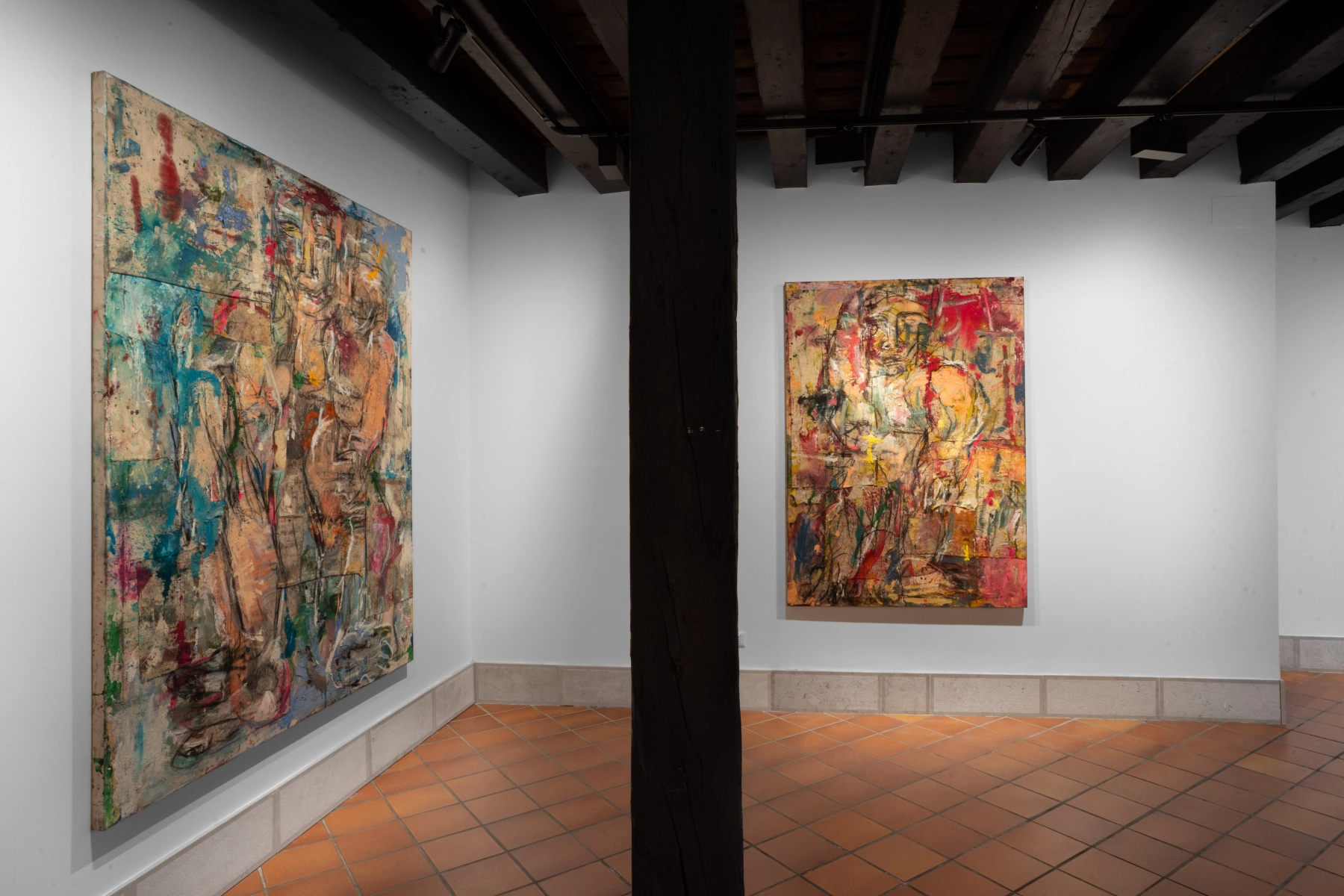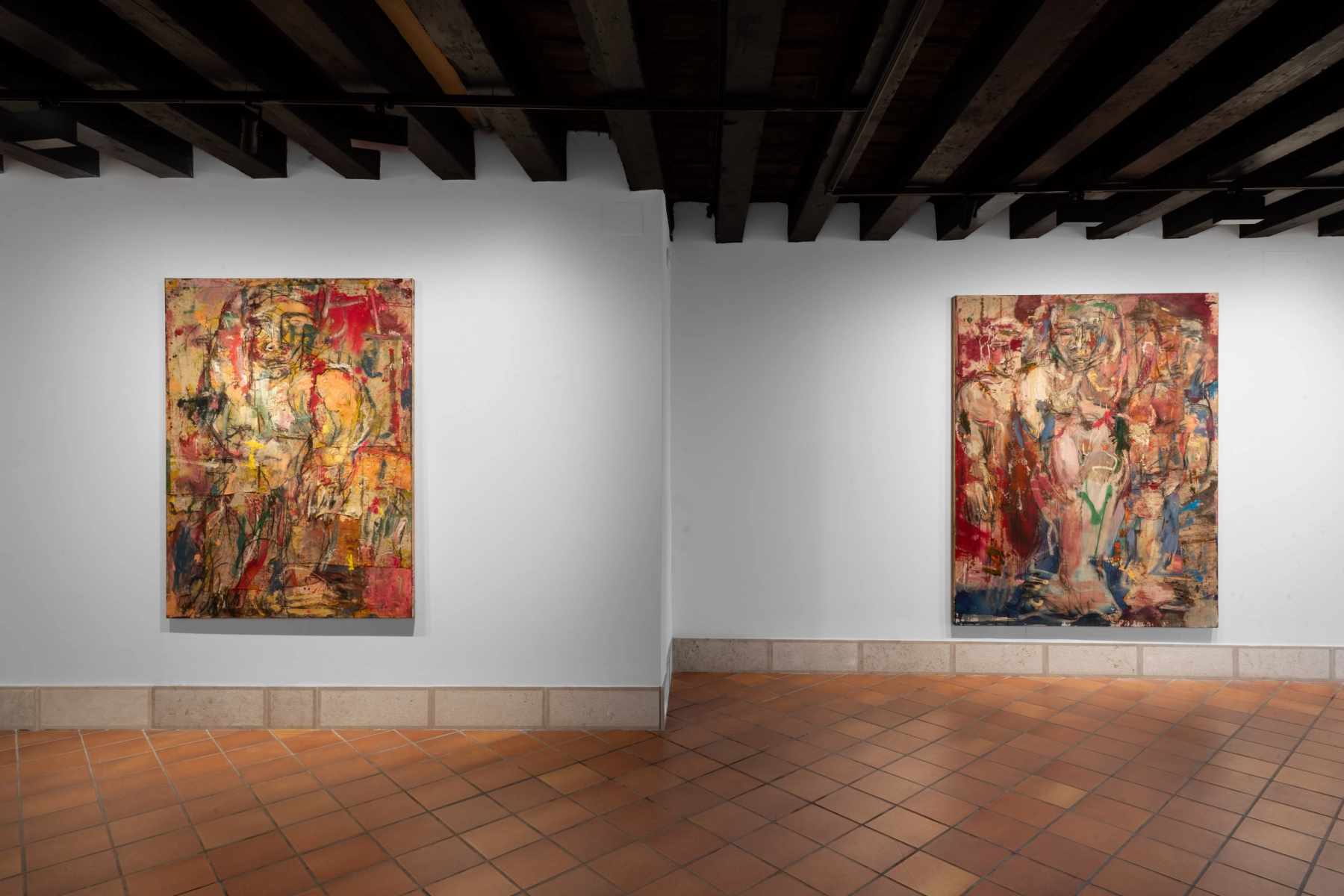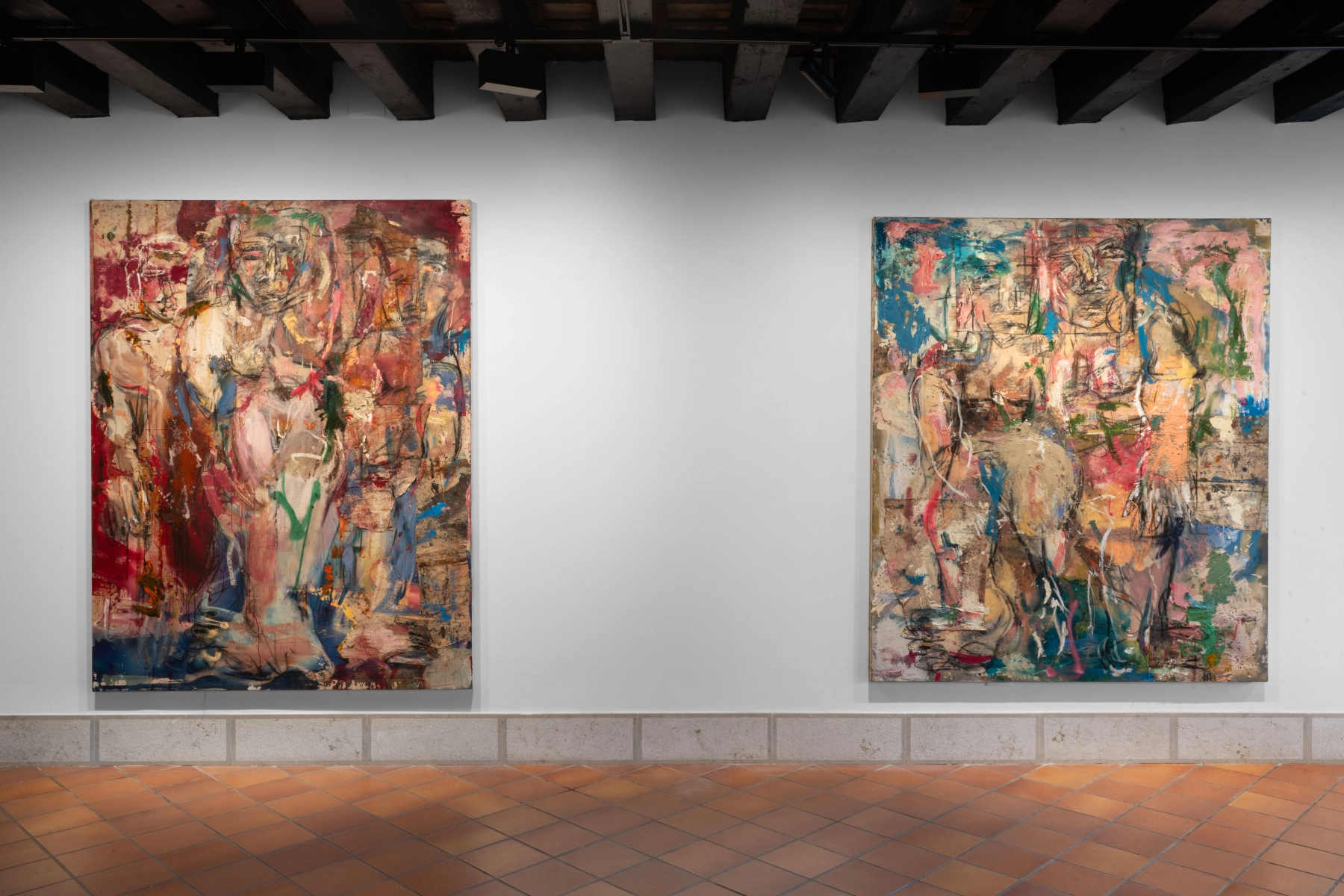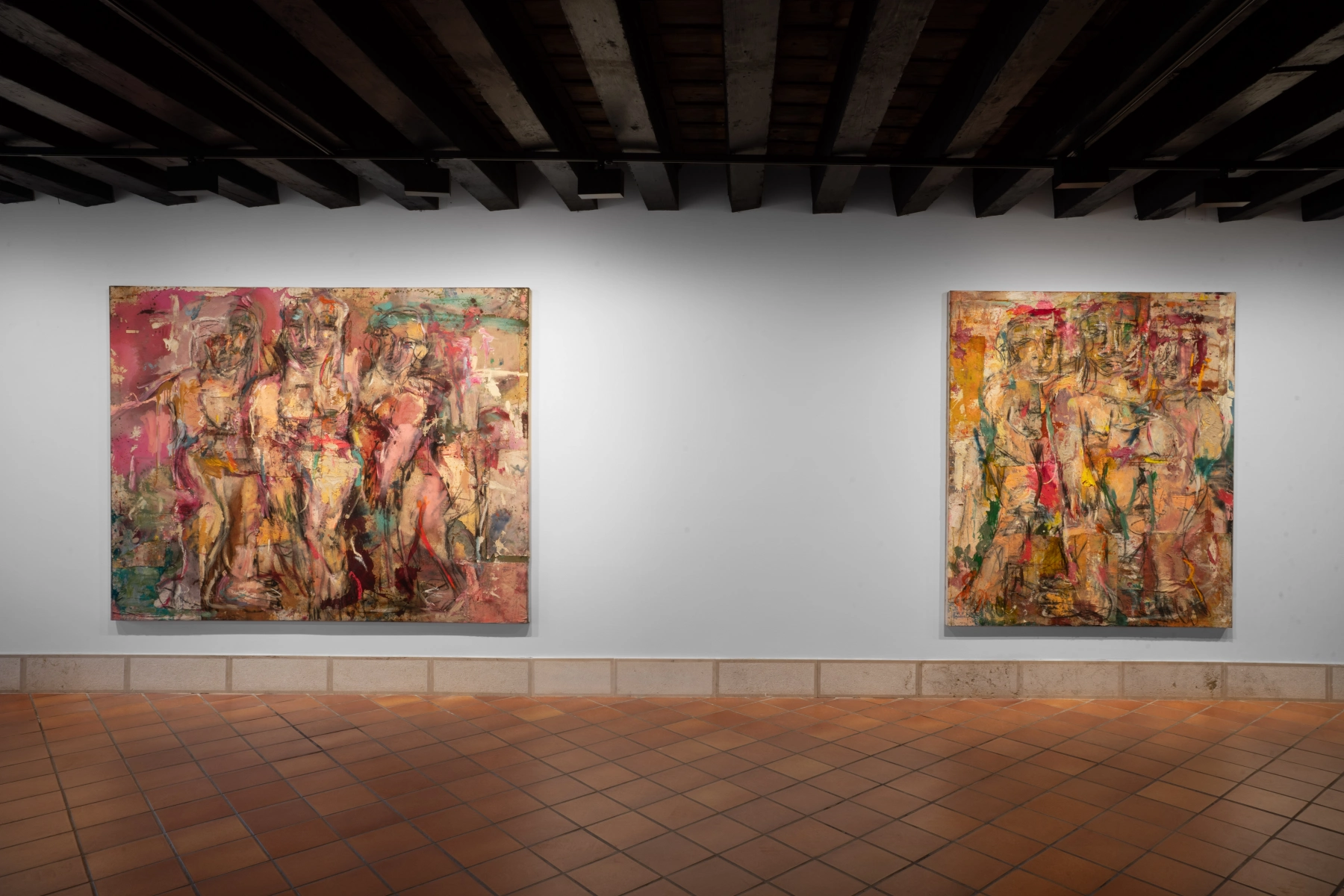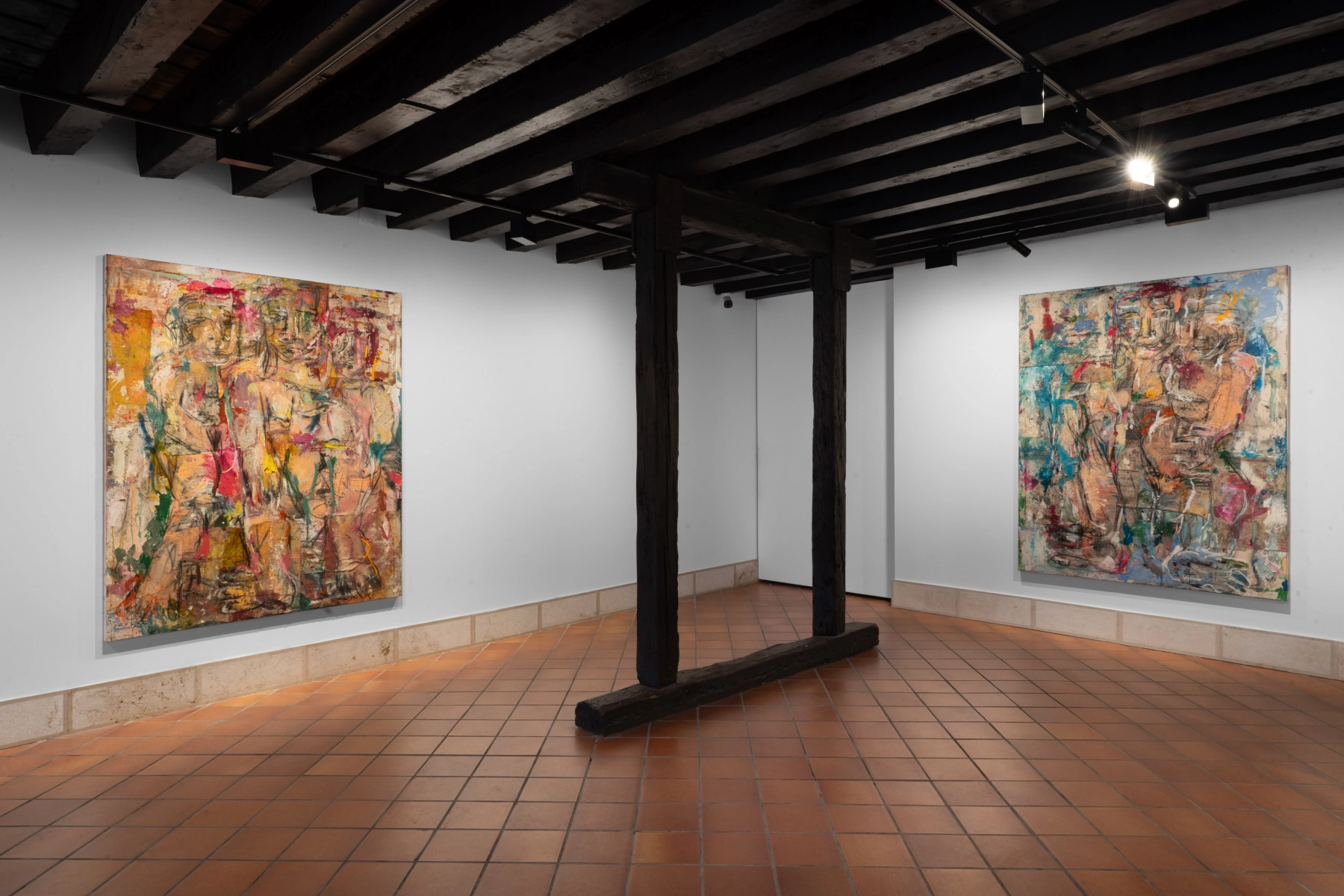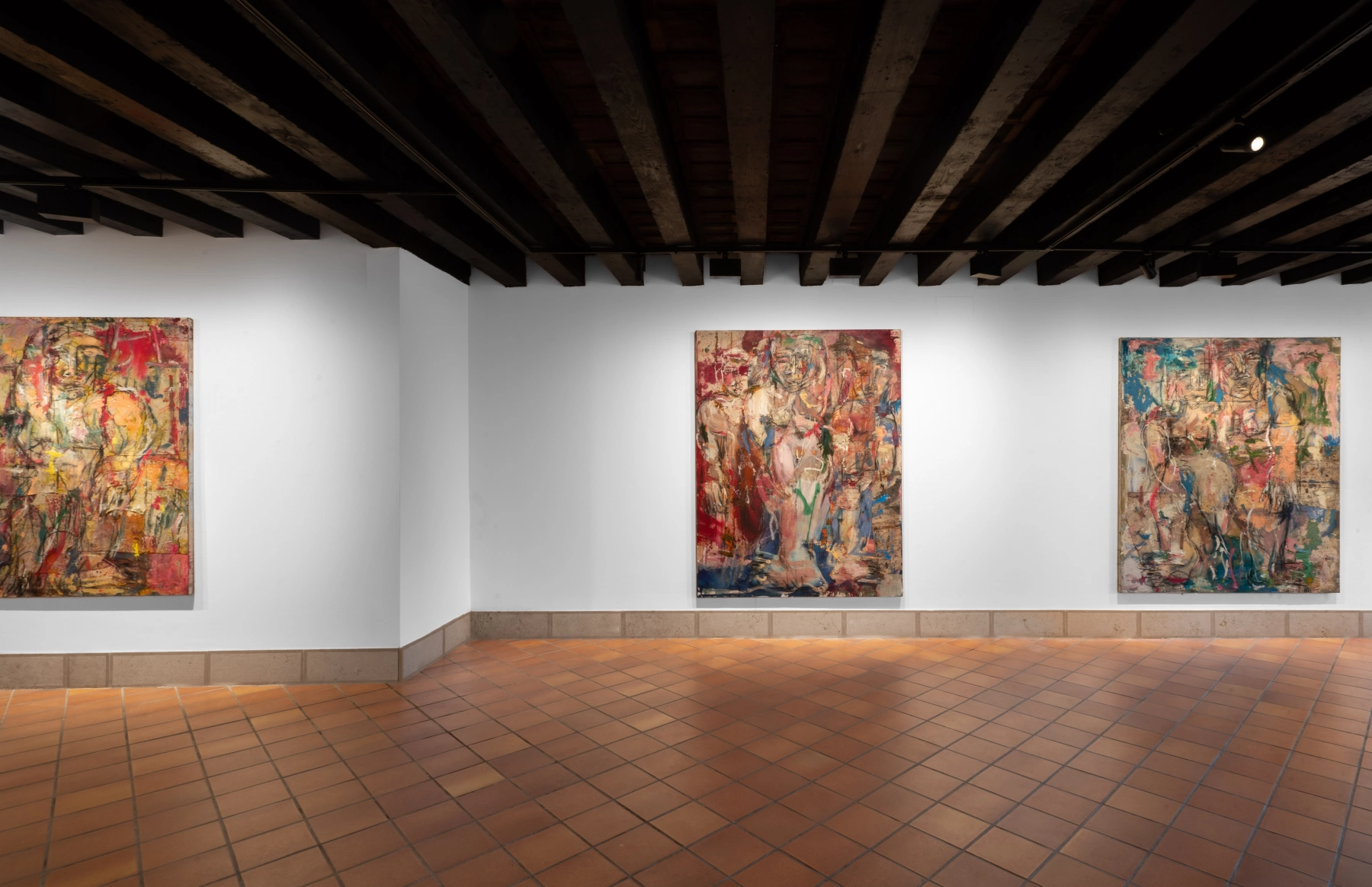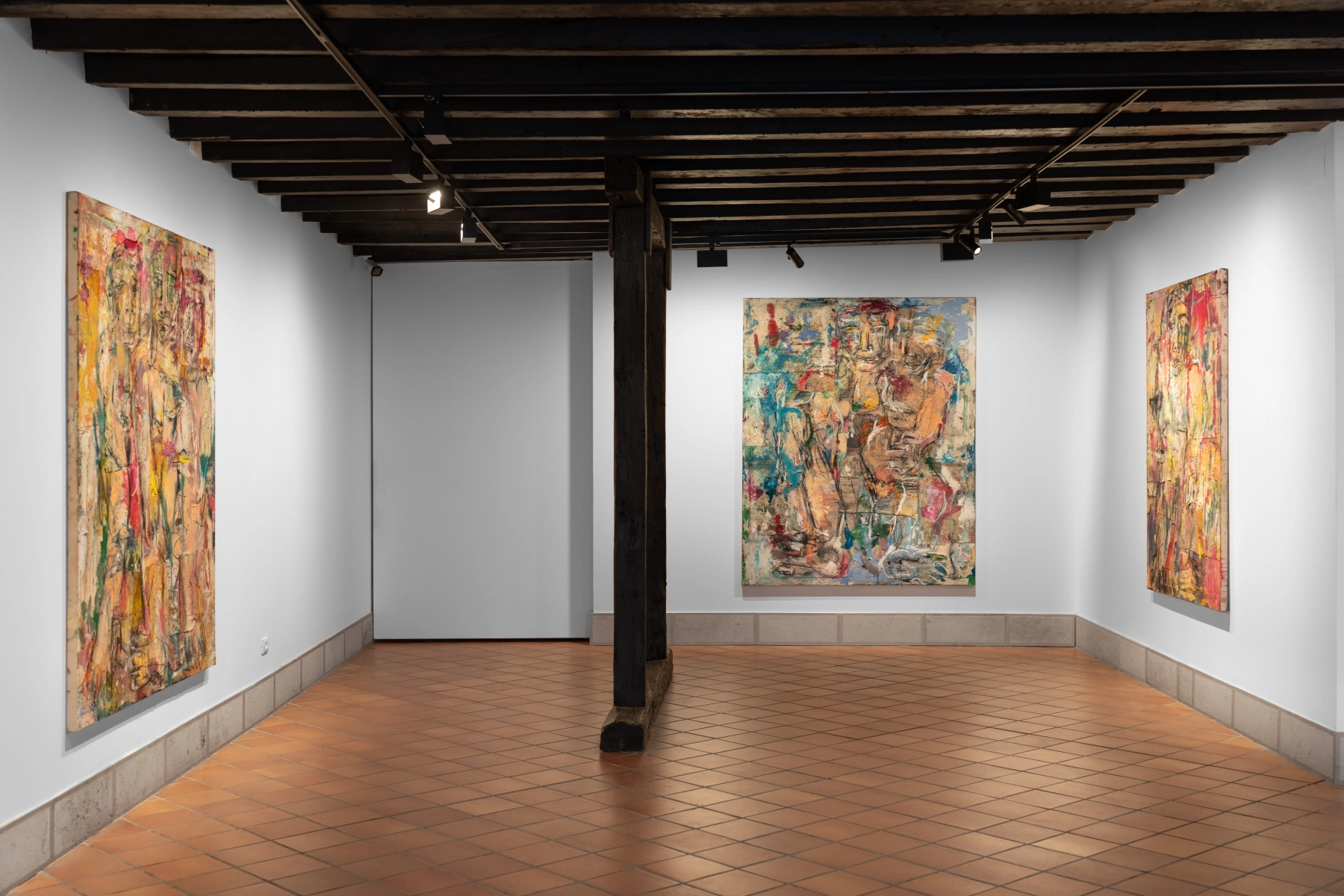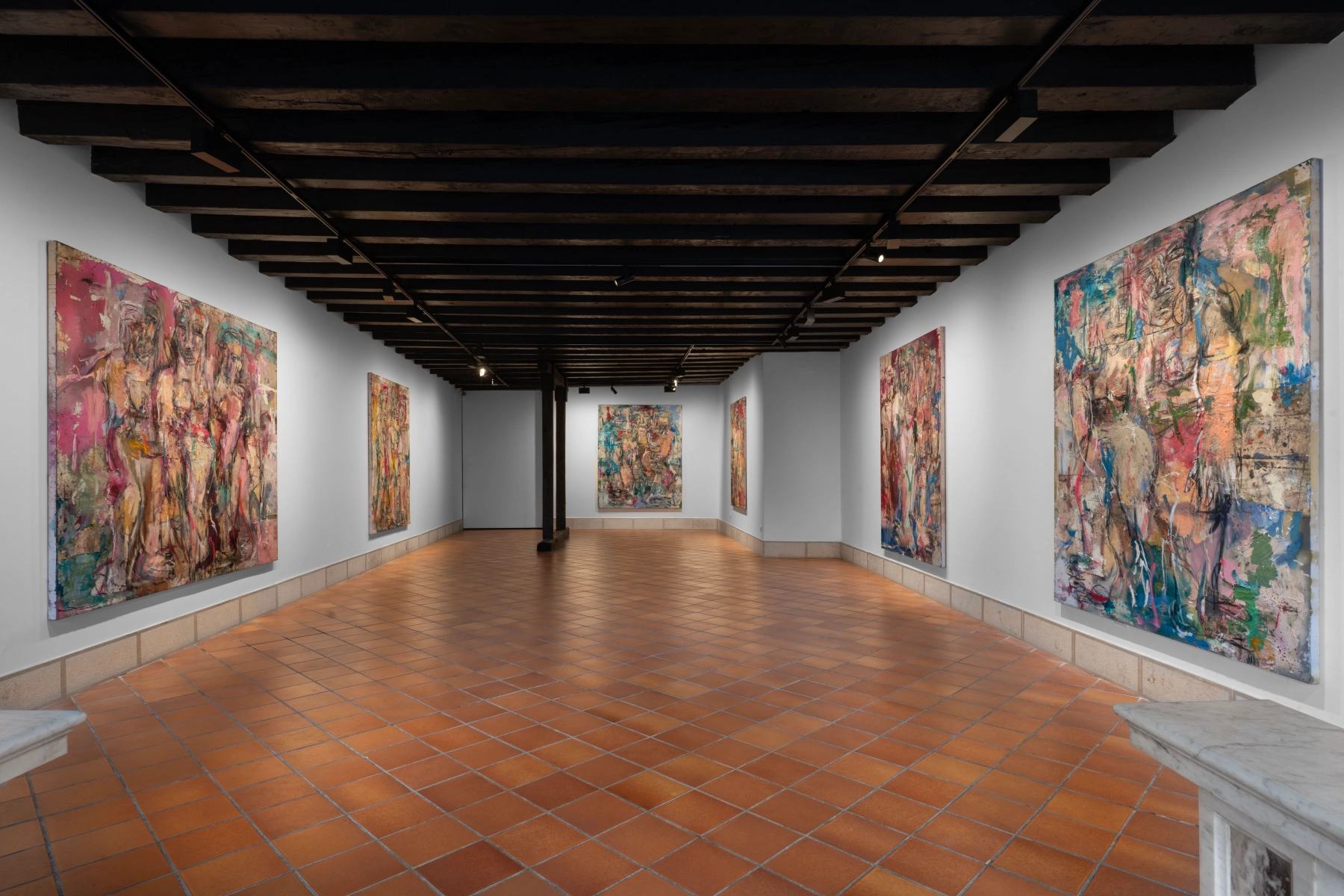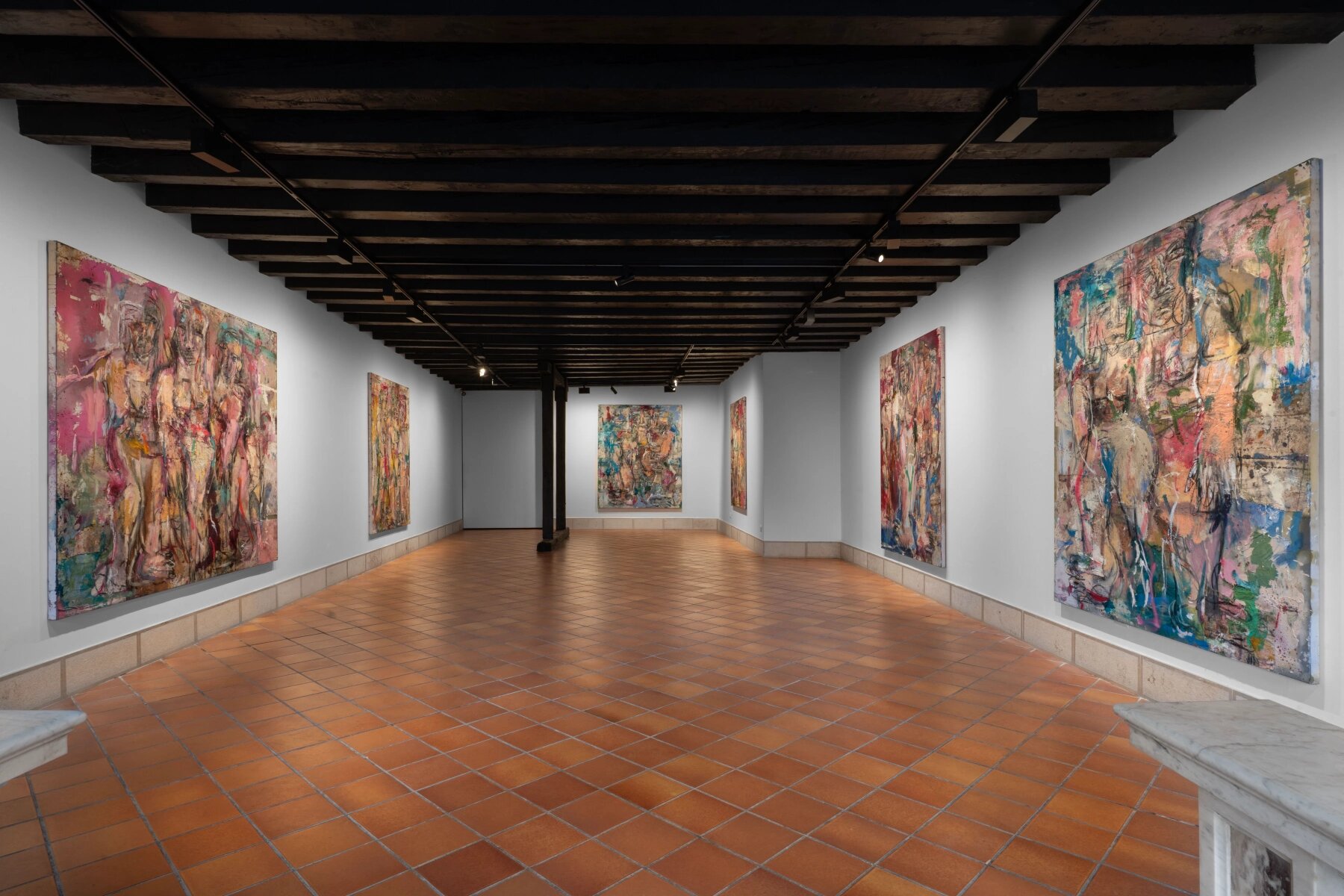
Daniel Crews-Chubb’s latest exhibition, The Belt of Venus, presents six monumental new paintings that continue his exploration of the human figure while pushing it into increasingly abstract territory. Taking its title from the atmospheric phenomenon visible just before sunrise or after sunset, a luminous pink band that separates the Earth’s shadow from the brightening sky, the exhibition draws directly from this fleeting spectacle. The ethereal palette of pinks, violets, and warm tones flows throughout the gallery, creating a visual atmosphere that feels both celestial and deeply connected to the physicality of the human body.
At the heart of these new works is an investigation into pareidolia, the psychological tendency to perceive familiar forms within abstract or ambiguous imagery. As social beings, humans instinctively search for faces, limbs, and bodies in the visual world around them. Crews-Chubb embraces this phenomenon, positioning his paintings at the threshold between abstraction and representation. With remarkable precision, he tests how little visual information is required for a viewer to recognize a figure. The large scale of the works invites an immediate physical encounter, yet the forms themselves remain elusive, resisting fixed interpretation and encouraging prolonged observation.
Figures emerge throughout the exhibition in ways that are consistent with the artist’s broader practice. Some canvases focus on solitary figures, while others are populated by dense clusters of bodies that seem to materialize from chaos. Across both approaches, mythology serves as a recurring foundation. Crews-Chubb frequently references gods, goddesses, and fragmented classical sculptures, drawing inspiration from the broken forms of ancient Roman statuary. These fractured bodies function as contemporary memento mori, reminding viewers of human vulnerability, mortality, and the passage of time. The exhibition’s title further reinforces this connection by invoking Venus, the Roman goddess of love and beauty, whose presence introduces themes of feminine power, strength, and transformation.
A defining characteristic of Crews-Chubb’s work is its ongoing dialogue with art history. His paintings feel simultaneously familiar and entirely contemporary, drawing upon centuries of artistic tradition while remaining unmistakably his own. Influences from expressive painters such as Willem de Kooning and Cecily Brown can be sensed throughout the works, while structural references to Cubism play an equally significant role. The artist has cited Georges Braque’s Girl with a Mandolin as an important point of reference for this series. Rather than adopting a purely Cubist aesthetic, however, Crews-Chubb borrows the movement’s ability to depict a figure from multiple viewpoints simultaneously, creating a sense of motion and instability within the image.
This historical engagement extends beyond composition into the poses and gestures of the figures themselves. Echoes of classical sculpture and Renaissance masterpieces appear throughout the exhibition, with postures reminiscent of Michelangelo’s David or the Three Graces emerging from layers of vigorous brushwork and textured surfaces. Yet these references are never presented as direct quotations. Instead, Crews-Chubb reimagines and disrupts them, transforming familiar visual languages into something fresh and contemporary.
Central to this reimagining is the artist’s challenge to traditional representations of the female body. Throughout much of Western art history, women have often been depicted as passive subjects intended for visual consumption. Crews-Chubb rejects this convention entirely. His figures possess undeniable agency and authority, occupying space with confidence rather than submission. Their identities and narratives remain deliberately unresolved, concealed within layers of abstraction that prevent easy interpretation. By preserving this sense of mystery, the artist allows his subjects to exist on their own terms, asserting their presence between the materiality of paint and the imagination of the viewer.
Through The Belt of Venus, Daniel Crews-Chubb creates a compelling body of work that merges mythology, perception, and art history into a powerful exploration of the human figure. The exhibition invites viewers to question not only what they see, but also how they see, revealing the fragile boundary between recognition and abstraction.
all images © the gallery and the artist(s)