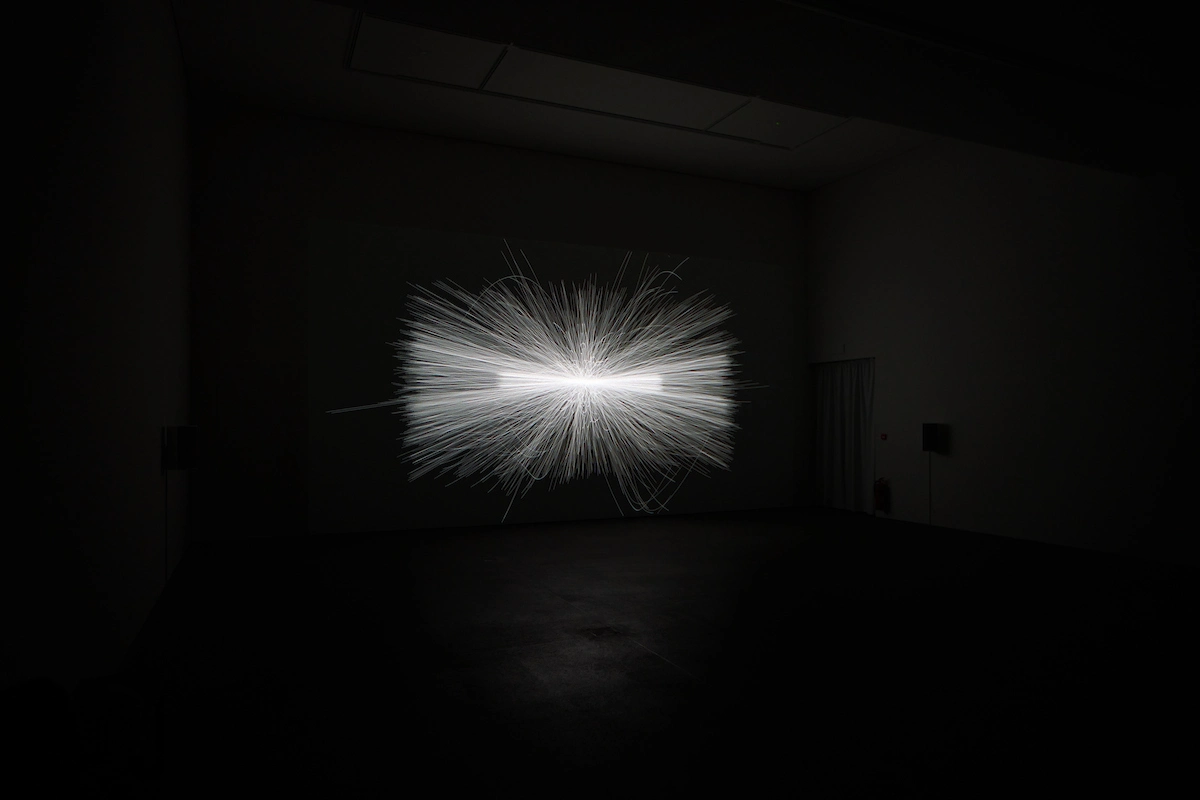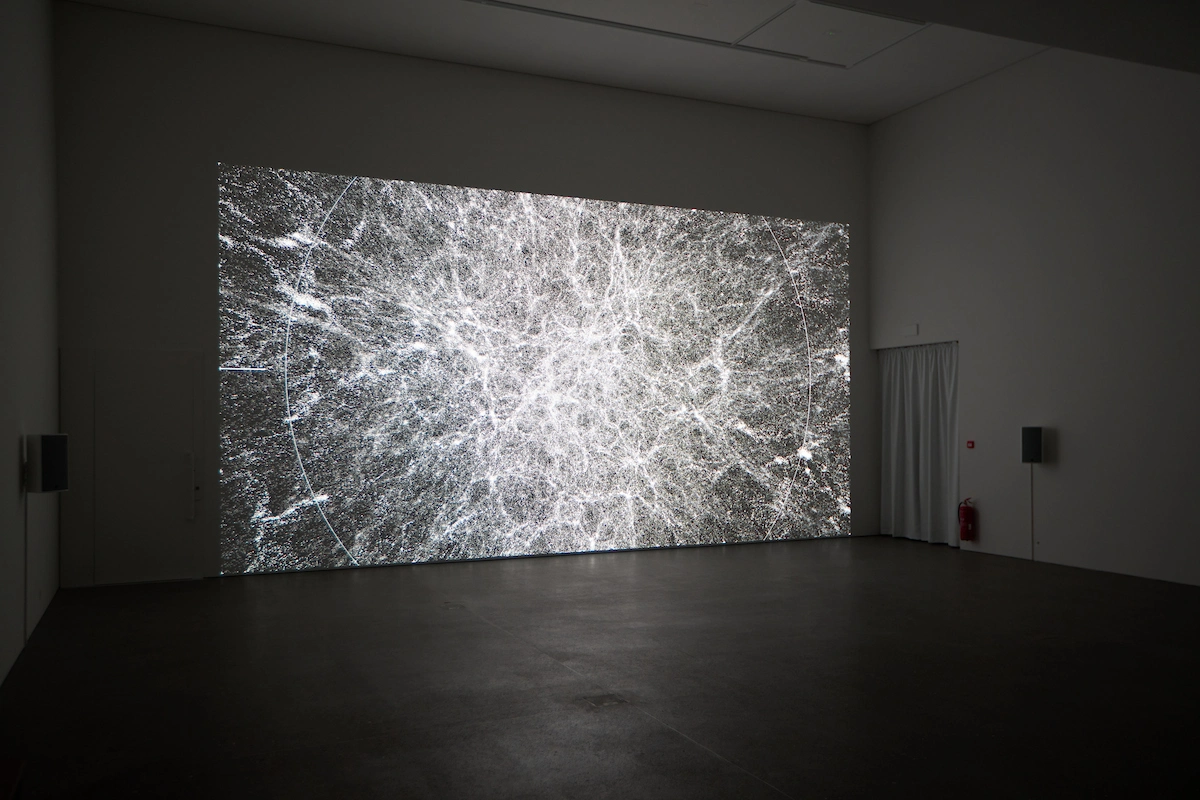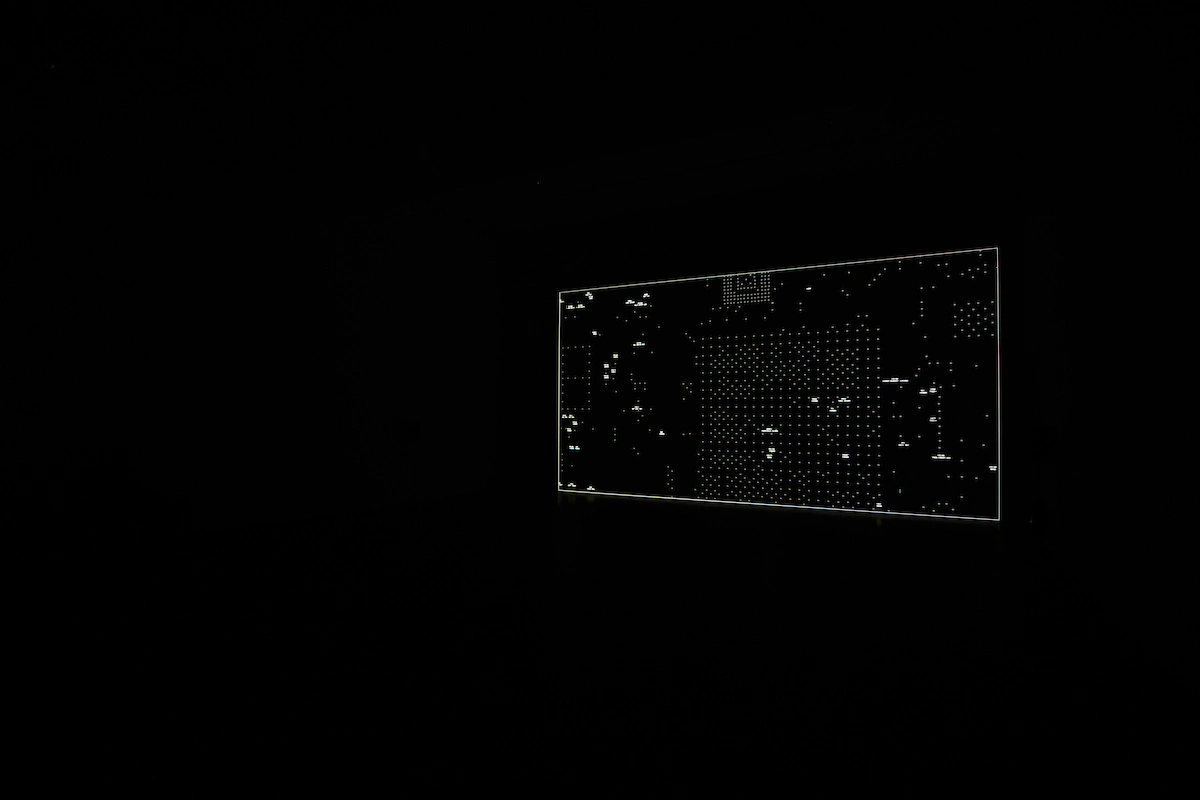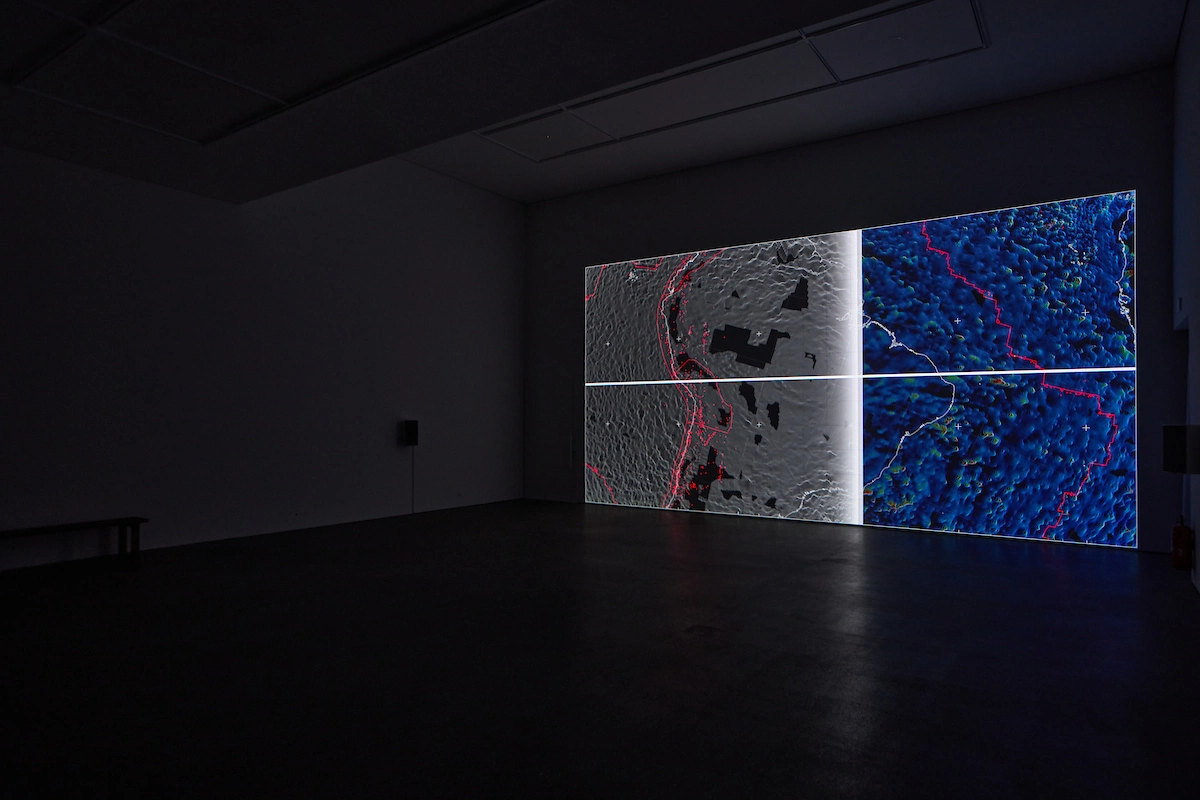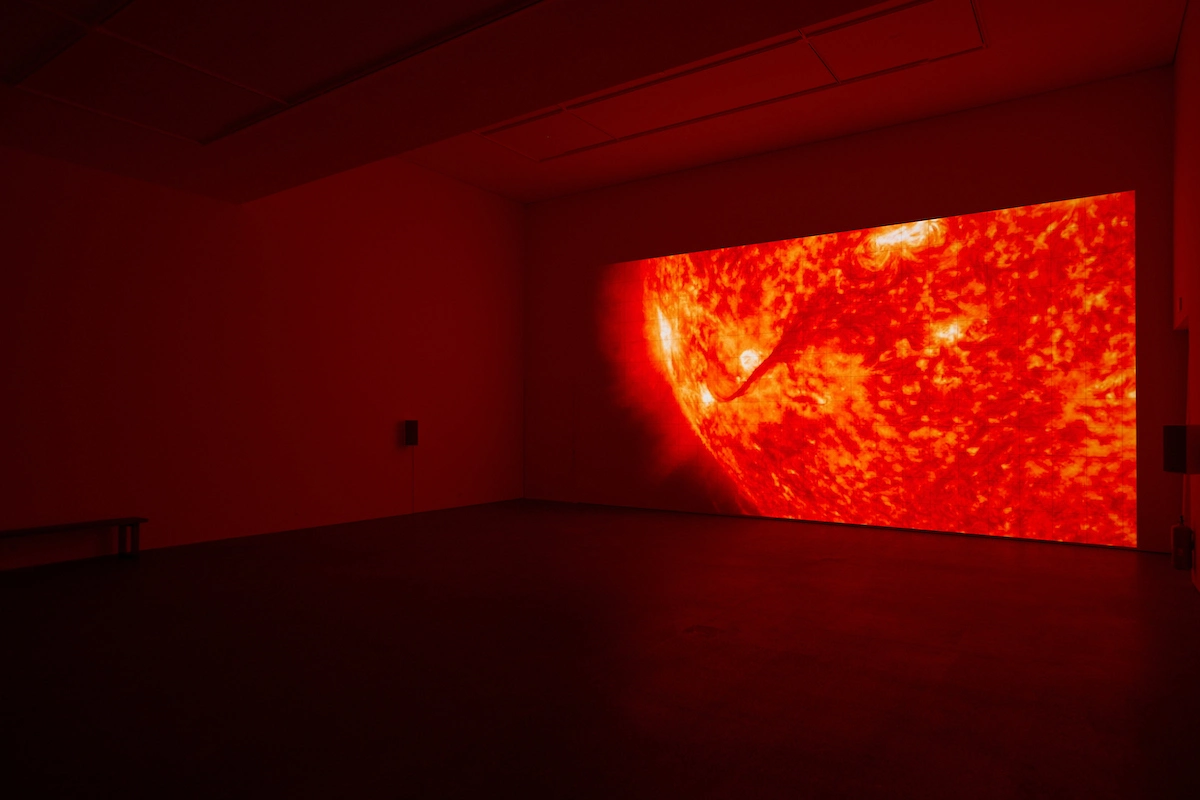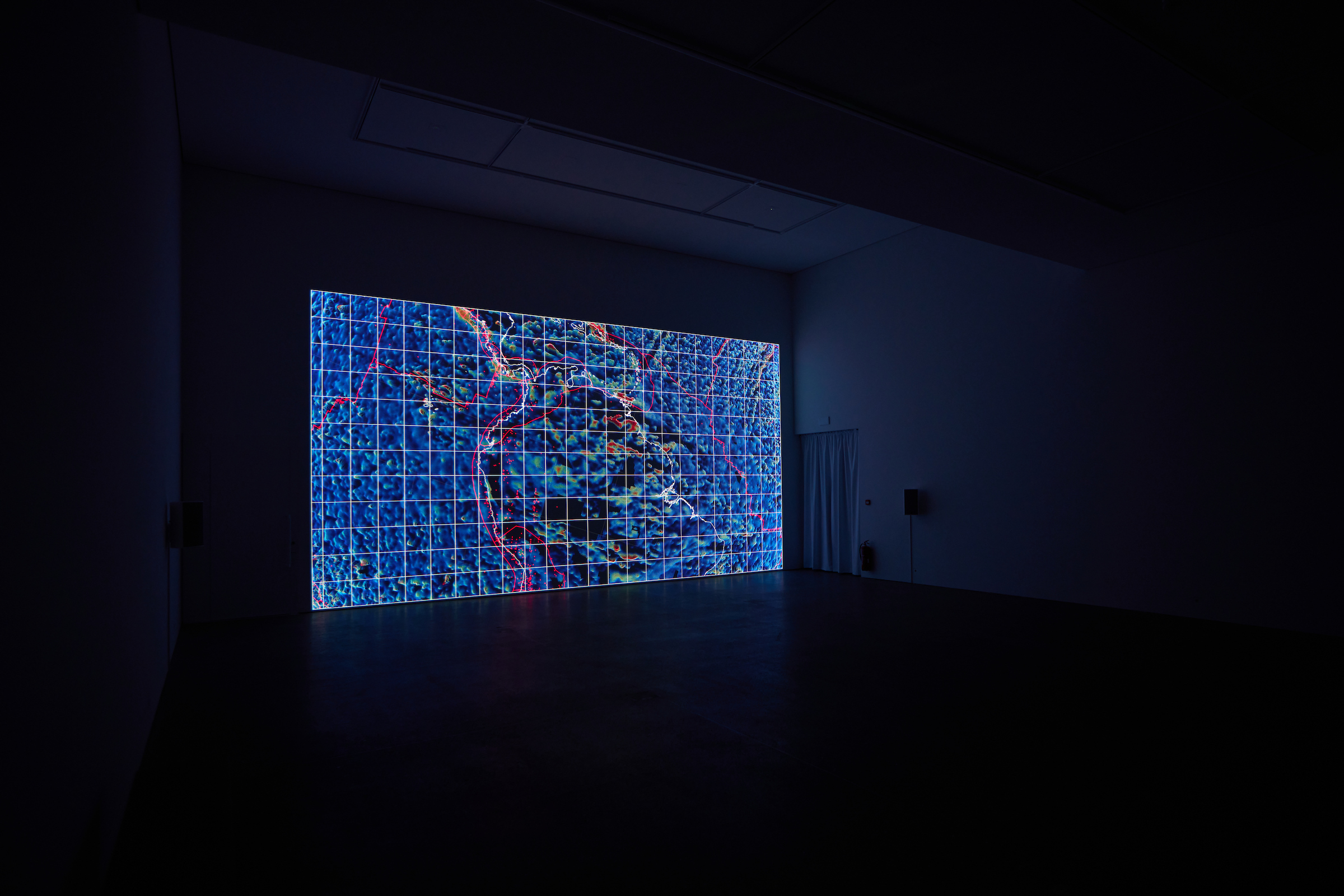
Ryoji Ikeda’s 2019–2020 work data-verse is the culmination of sixteen years of research into quantum physics, mathematics, and data science. According to the artist, this piece reflects his deep desire to understand the fundamental principles of nature and the laws that govern our universe.
The visual and auditory language of the work draws from vast datasets provided by leading scientific institutions, including NASA, CERN, and the Human Genome Project. Concepts such as galactic coordinates, protein structures, and DNA sequences are translated into aesthetic patterns through Ikeda’s unique mathematical compositions, creating an experience that is both visually striking and intellectually engaging.
data-verse explores the spectrum from microscopic systems, like the quantum states of atoms and fundamental particles, to the macroscopic scale of galaxies. Ikeda addresses human existence and the structures of our cities, digital networks, air traffic, and climate, while simultaneously representing the vast complexity of the cosmos. By combining sound, light, and mathematical compositions, the work immerses viewers in a multi-sensory environment, transforming raw data into perceivable and tangible experiences.
Through data-verse, Ikeda invites audiences to experience information as art, highlighting new ways of interacting with the overwhelming data landscape of today. Although there are more digital bytes than observable stars in the universe, the true value of data lies in its ability to be experienced, interpreted, and transformed into meaningful insight.
Ryoji Ikeda (b. 1966, Gifu, Japan) is a leading composer and visual artist whose work focuses on the fundamental properties of sound and light through mathematical precision and aesthetic exploration. Internationally recognized for his immersive audiovisual projects, Ikeda combines visuals, sound, materials, physical phenomena, and mathematical concepts into installations and live performances.
Since 2008, Ikeda has held solo exhibitions at major institutions worldwide, including the Centre Pompidou (Paris), Park Avenue Armory (New York), Museum of Contemporary Art Tokyo, ZKM Center for Art and Media (Karlsruhe), Eye Filmmuseum (Amsterdam), Taipei Fine Arts Museum, 180 The Strand (London), Hirosaki Museum of Contemporary Art, Amos Rex (Helsinki), High Museum of Art (Atlanta), and the National Asian Cultural Center (Gwangju). He currently lives and works in Paris, France, and Kyoto, Japan.
All Images © the gallery and the artist(s)