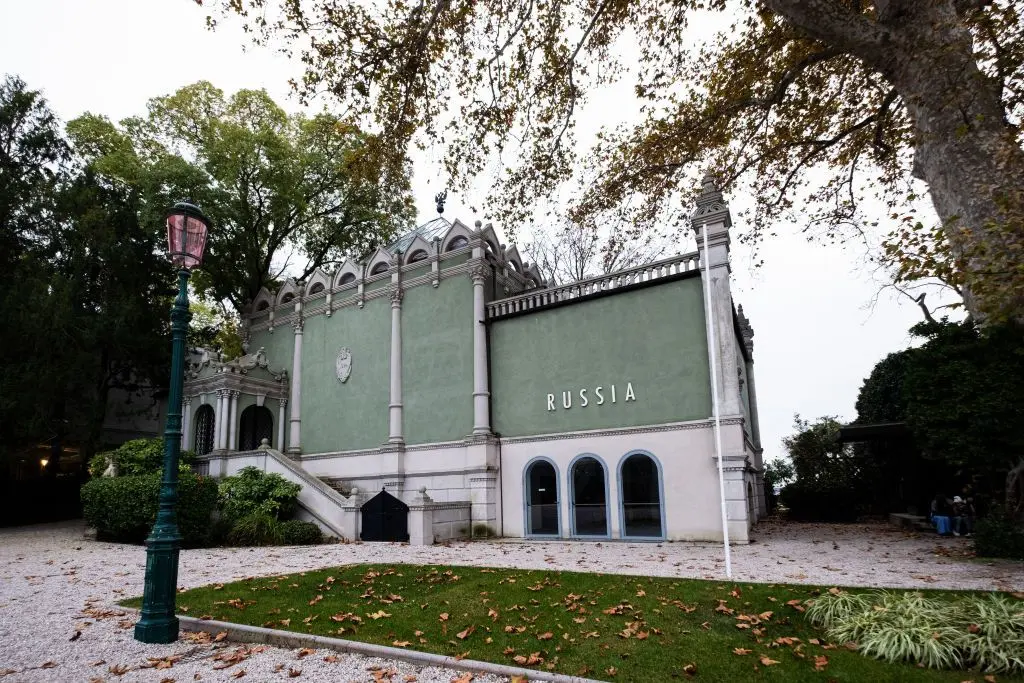
The forthcoming edition of the Venice Biennale is already drawing intense debate across the global art community as Russia prepares to reopen its national pavilion for the first time since the start of the Russian invasion of Ukraine in 2022.
Russia’s absence from the world-renowned exhibition over the past two editions followed the outbreak of the war, which prompted widespread cultural boycotts and the suspension of several Russian state-backed cultural initiatives across Europe. Now, as preparations for the upcoming Biennale move forward, the possibility of Russia’s return has reignited political and ethical discussions within the international arts sector.
Ukraine has been among the most vocal critics of the decision. Over the weekend, the Ukrainian government issued a strongly worded statement urging Biennale organizers to exclude Russia from this year’s event. Officials in Kyiv argue that allowing Russia to participate risks legitimizing a state that continues to wage war while cultural institutions attempt to maintain neutrality.
In a statement posted on social media, Ukraine’s foreign minister Andrii Sybiha stressed the global significance of the Biennale, describing it as one of the most authoritative platforms in the international art world. Sybiha warned that such a prestigious cultural stage should not become a vehicle for “whitewashing the war crimes that Russia commits daily against the Ukrainian people and our cultural heritage.”
The Ukrainian government’s criticism emerged at the same time an open letter began circulating within the international cultural community. The letter calls on Biennale organizers to reconsider Russia’s participation and remove its pavilion from the upcoming exhibition.
Addressed directly to Biennale president Pietrangelo Buttafuoco, the letter argues that including Russia could undermine the exhibition’s longstanding reputation as a nonpartisan and globally respected cultural platform. According to its authors, maintaining neutrality should not come at the cost of overlooking an ongoing war and its humanitarian consequences.
Supporters of the letter say that the issue goes beyond a single pavilion, raising broader questions about the responsibilities of major international cultural institutions in times of geopolitical crisis. Critics fear that cultural events risk becoming tools of soft power if governments involved in armed conflict are allowed to participate without scrutiny.
At the same time, others within the art world caution against politicizing cultural platforms, arguing that international exhibitions have historically served as spaces for dialogue, artistic exchange, and critical reflection even during periods of global tension.
As preparations for the next Biennale continue, the debate surrounding Russia’s participation is likely to remain a central issue. The controversy highlights the increasingly complex relationship between art, diplomacy, and global politics, and raises difficult questions about whether cultural institutions can or should remain neutral in the face of ongoing conflict.