Malta, a Mediterranean island known for its 5,000-year-old megalithic temples, historic architecture and crystal-clear waters, is increasingly making its mark on the international contemporary art scene. At the heart of this transformation is the Malta International Contemporary Art Space (MICAS), the country’s first contemporary art museum, which opened in 2024.
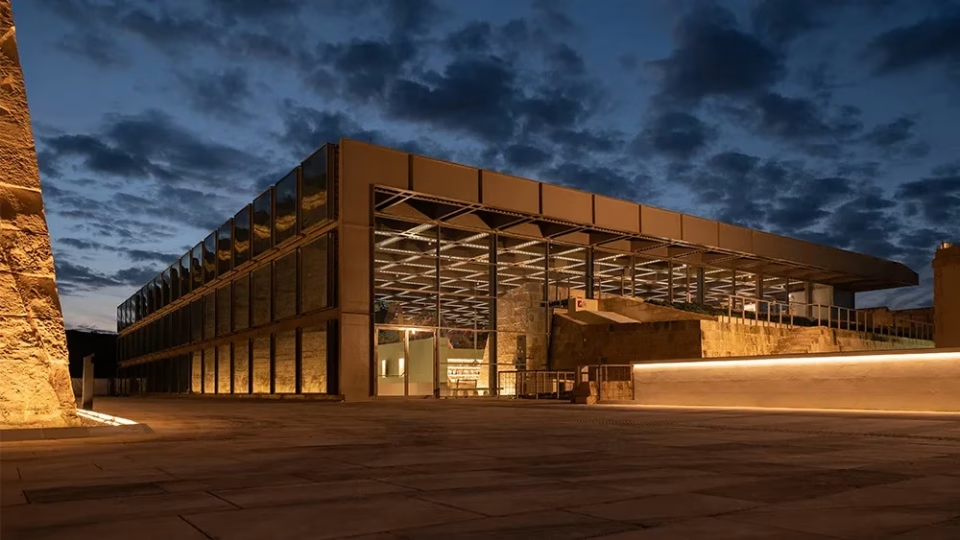
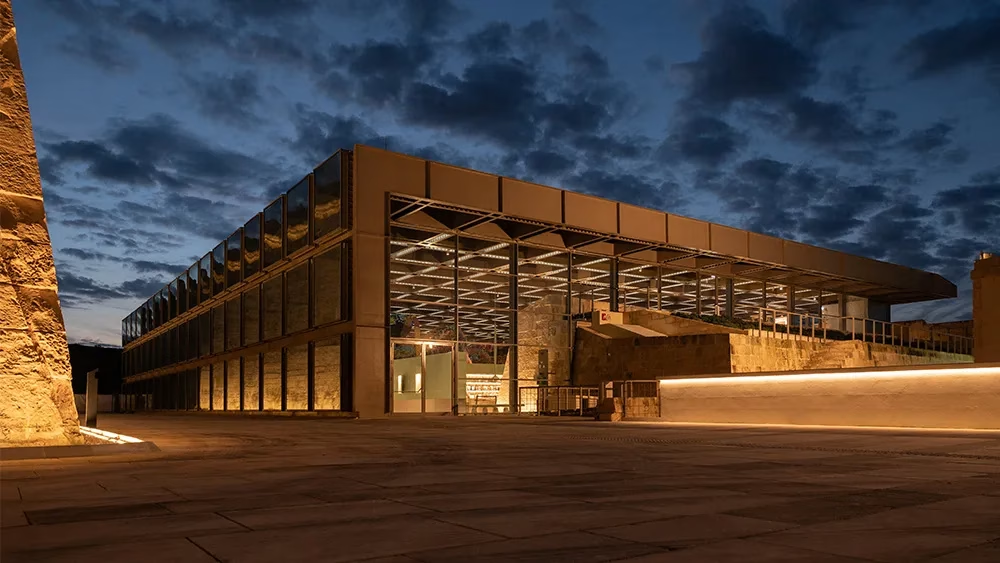
Located in Valletta, MICAS occupies a remarkable historic complex incorporating 17th-century Floriana fortifications, a former Knights-era poorhouse and an old gunpowder magazine. The ambitious restoration project, jointly funded by the Maltese Government and the European Union, transformed more than 64,500 square metres of previously inaccessible space into galleries and public areas.
Overseen by the Florentine architectural practice Ipostudio, the redevelopment brings together Malta’s centuries-old architectural heritage and the requirements of a contemporary museum. Historic defensive structures have been transformed into large-scale exhibition spaces, creating a distinctive setting for international and Maltese artists.
The museum’s ambitious programme is led by Artistic Director Edith Devaney, who previously spent more than two decades as a Senior Curator at London’s Royal Academy of Arts. Since its opening, MICAS has established a programme that places international contemporary art alongside Malta’s emerging and established artistic voices.
Its inaugural programme featured a major solo exhibition by Portuguese artist Joana Vasconcelos, whose monumental sculptures filled the museum’s spaces. A subsequent exhibition explored the legacy of American painter Milton Avery through works by contemporary artists including Nicolas Party, Jonas Wood and Andrew Cranston.
At the same time, MICAS has made a strong commitment to Malta’s own artistic community. Works by prominent Maltese artists such as Caesar Attard, Vince Briffa and Anton Grech have been presented alongside international artists. The museum’s outdoor sculpture garden also features permanent works by Ugo Rondinone, Conrad Shawcross and renowned Maltese artist Ray Pitrè.
One of the defining aspects of MICAS’s programme is its focus on creating a dialogue between international artists and Malta’s distinctive cultural, historical and geographical context. Reggie Burrows Hodges’s current exhibition, Mela, is a particularly strong example of this approach.

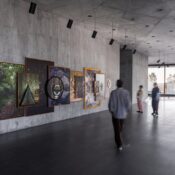
Installation view of Reggie Burrows Hodges: Mela at Malta International Contemporary Art Space (MICAS). Photography by Julian Vassallo.
Running through August 30, Mela brings together more than 30 large-scale paintings that expand Hodges’s ongoing exploration of labour, power and memory through the history and contemporary landscape of Malta. To create the new body of work, the American artist relocated his studio to Malta for more than a year, allowing him to engage directly with the island and its cultural environment.

Installation view of Reggie Burrows Hodges: Mela at Malta International Contemporary Art Space (MICAS). Photography by Julian Vassallo.
Among the exhibition’s highlights is Mammajamma (2025), a monumental, site-specific work inspired by the scale and formal elements of Caravaggio’s 1608 masterpiece The Beheading of Saint John the Baptist. The work was created in the Oratory of St John’s Co-Cathedral in Valletta, establishing a direct connection between Malta’s artistic heritage and Hodges’s contemporary practice.
Part of Hodges’s ongoing Labor series, the works also examine the construction of Malta’s rapidly changing built environment and the human labour behind it. An accompanying sound installation draws on Neolithic musical narratives and the civilizations that once inhabited Malta and Gozo.
Hodges has described his time in Malta as an essential part of the project, emphasizing that immersing himself in the island’s culture allowed him to experience a richness that would otherwise have remained inaccessible.
This dialogue between international artists and Malta will continue with A New Life Force, opening in October 2026. The exhibition will feature Nathanaëlle Herbelin, Kemi Onabulé and Megan Rooney, each presenting new paintings inspired by Malta’s culture, geography and history while responding to the museum’s distinctive architecture and natural light.
Beyond exhibitions, MICAS is also positioning itself as a centre for international discussion and exchange. Its public programme includes artist talks and conversations with leading figures from the global art world, including Philadelphia Museum of Art Director Emeritus Timothy Rub and Richard Noble, Head and Professor of Art at Goldsmiths, University of London.
Last month, the museum hosted a two-day symposium dedicated to museum architecture. Bringing together architects, historians, curators, museum professionals and sociologists, the event examined how contemporary art institutions can operate within historic sites and how these spaces can encourage new forms of cultural and social engagement.
The museum’s rapid development is the result of more than a decade of planning. Executive Director Phyllis Muscat, who has been involved with the project since 2013, has described the creation of an international art institution in a small island nation with no established museum building as a significant challenge. Through international networks connecting artists, curators, museums, foundations and art historians, however, MICAS has quickly established a presence within the global art community.
Speaking at the museum’s opening, Maltese Prime Minister Robert Abela described MICAS as a symbol of the country’s cultural progress and expressed his belief that Malta could become a genuine centre of artistic creativity in the Mediterranean.
Today, MICAS is doing more than providing Malta with its first dedicated contemporary art museum. By bringing international artists together with Malta’s local creative community, encouraging artists to engage with the island’s history and transforming historic architecture into contemporary exhibition spaces, the institution is reshaping Malta’s position within the global art landscape.
For Malta, MICAS represents a new cultural chapter—one in which the island’s ancient heritage becomes a foundation for contemporary artistic exchange and a gateway to a growing international art scene.