When discussing art history, themes such as religion, power, war, and mortality often dominate the conversation. As a result, laughter and humor have long been viewed as secondary subjects within artistic traditions. Yet, throughout history, artists have consistently used humor not only to entertain but also to observe society, challenge authority, and explore the complexities of human nature.
From ancient civilizations to contemporary installations, laughter has remained one of art’s most enduring and powerful forms of expression.
The First Smiles in Ancient Art

Ancient Greek Comic Mask, 3rd century BCE. Comic theater played a significant role in introducing humor and laughter into visual culture and everyday life.
Contrary to popular belief, ancient art was not always solemn. In Ancient Greece, artists frequently depicted humorous scenes on pottery and ceramics inspired by comedy theater. Clumsy characters, festive banquets, and exaggerated situations reflected everyday life with a playful spirit.
The Romans also embraced humor in their artistic creations. Frescoes and mosaics often featured grotesque figures, comic scenes, and satirical representations of ordinary people. These works reveal that laughter was already recognized as a meaningful reflection of society and human behavior.
Hidden Humor in the Middle Ages
At first glance, medieval art appears overwhelmingly focused on religious themes. However, a closer look at illuminated manuscripts reveals a surprising world of humor.
Artists often filled the margins of sacred texts with whimsical illustrations: animals playing musical instruments, knights battling giant snails, and fantastical hybrid creatures engaged in absurd activities. These playful details demonstrate that even within deeply religious contexts, there was room for imagination, wit, and amusement.
Far from being accidental decorations, these images remind us that medieval artists and patrons appreciated humor just as much as modern audiences do.
The Renaissance and the Rediscovery of the Smile
The Renaissance marked a turning point in the representation of human emotion. Artists became increasingly interested in capturing psychological depth and realistic expressions.
Perhaps the most famous example is Leonardo da Vinci’s Mona Lisa.

Leonardo da Vinci, Mona Lisa, c. 1503-1519. The painting’s enigmatic smile remains one of the most discussed expressions in the history of art.
Her enigmatic smile continues to fascinate viewers centuries later. Neither fully joyful nor entirely serious, her expression exists in a delicate space between mystery and amusement.
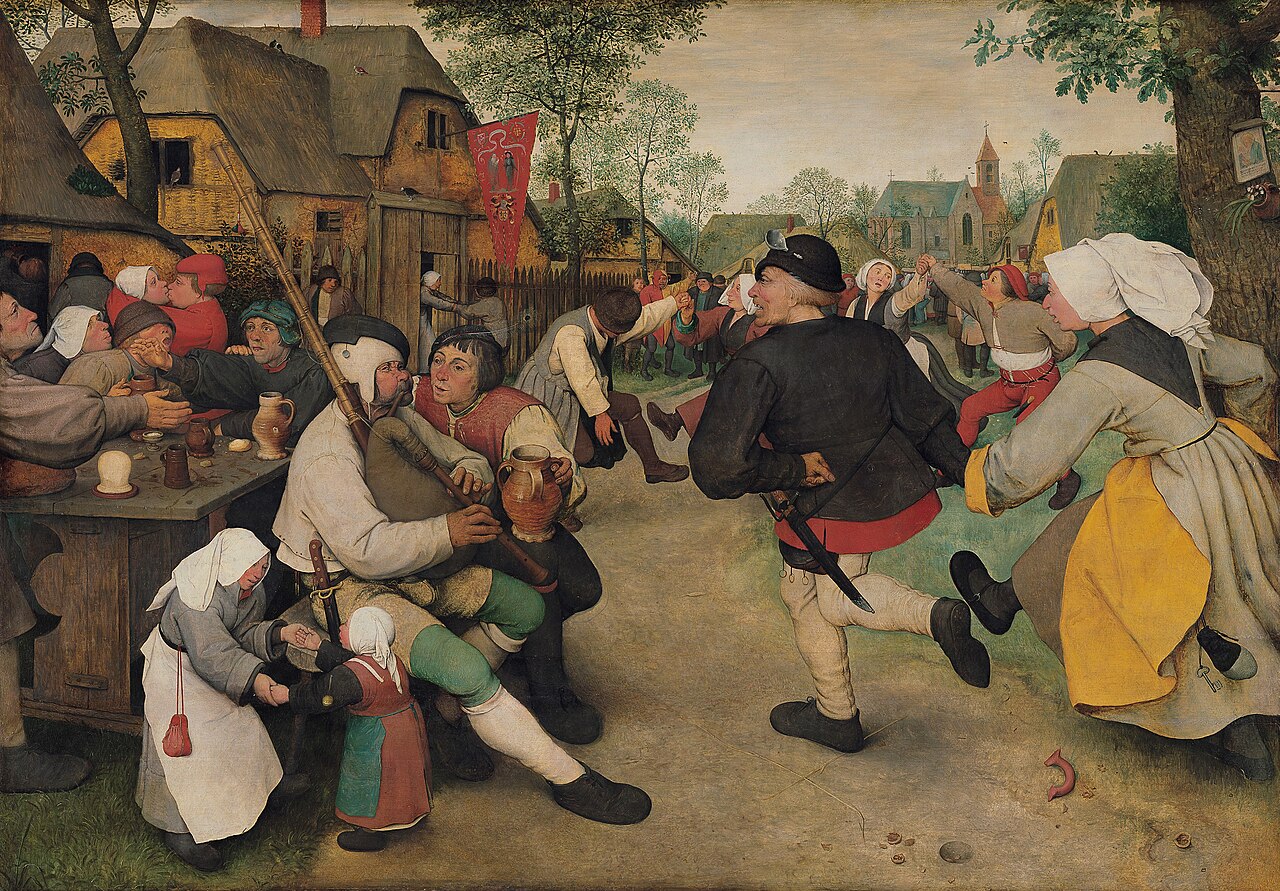
At the same time, Northern European painters such as Pieter Bruegel the Elder turned their attention to everyday life.
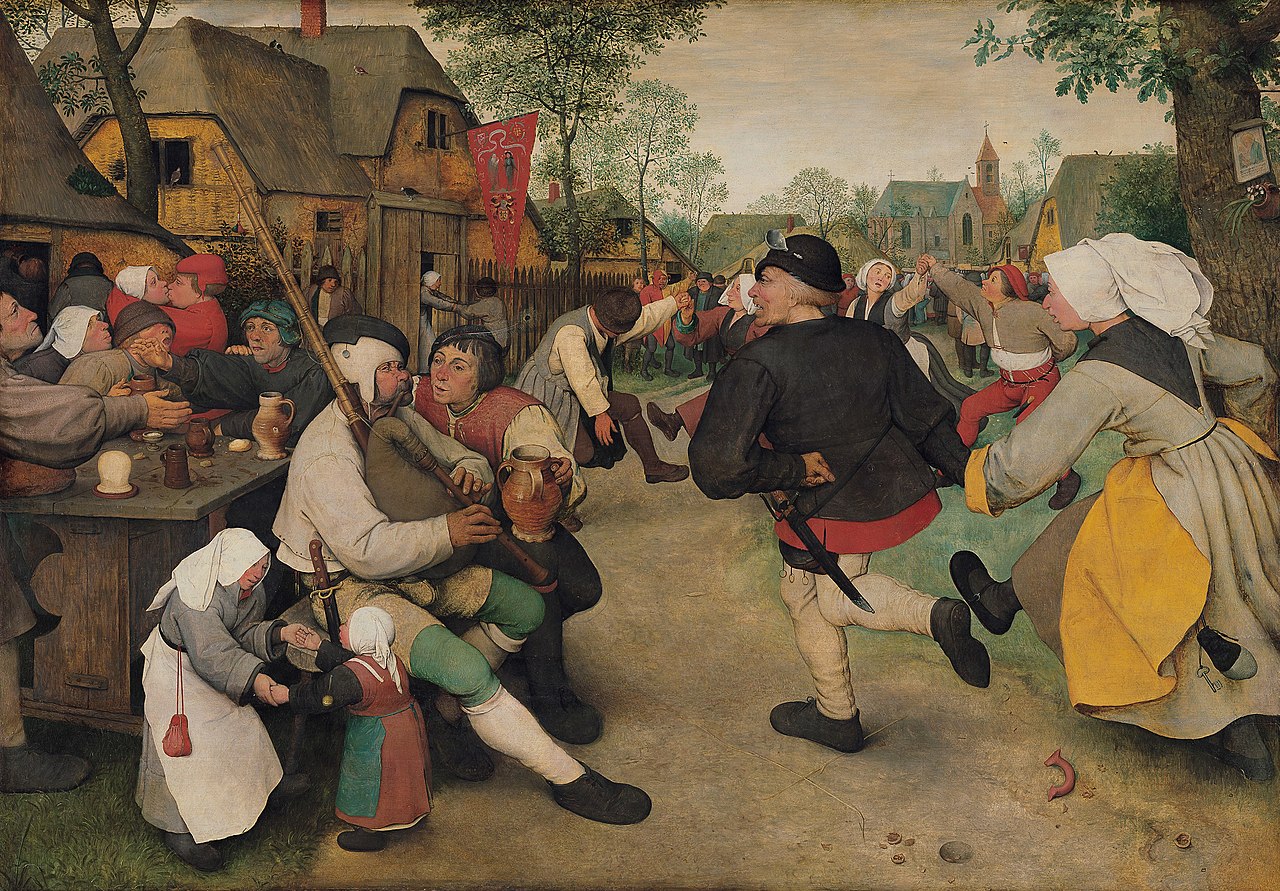
Pieter Bruegel the Elder, The Peasant Dance, c. 1567-1568. Through lively scenes of dancing and celebration, Bruegel captured both the joy and folly of everyday life
His vibrant village festivals are populated by dancing, drinking, and laughing figures, offering a lively and often mischievous portrait of human nature.
Humor as Social Criticism
Beginning in the seventeenth century, humor evolved into a powerful tool for social and political commentary. Artists increasingly used satire to expose hypocrisy, criticize authority, and highlight social inequalities.
In eighteenth-century Britain, William Hogarth created narrative engravings that portrayed the flaws and excesses of contemporary society. Rich in detail and irony, his works encouraged viewers to laugh while reflecting on deeper moral and social issues.
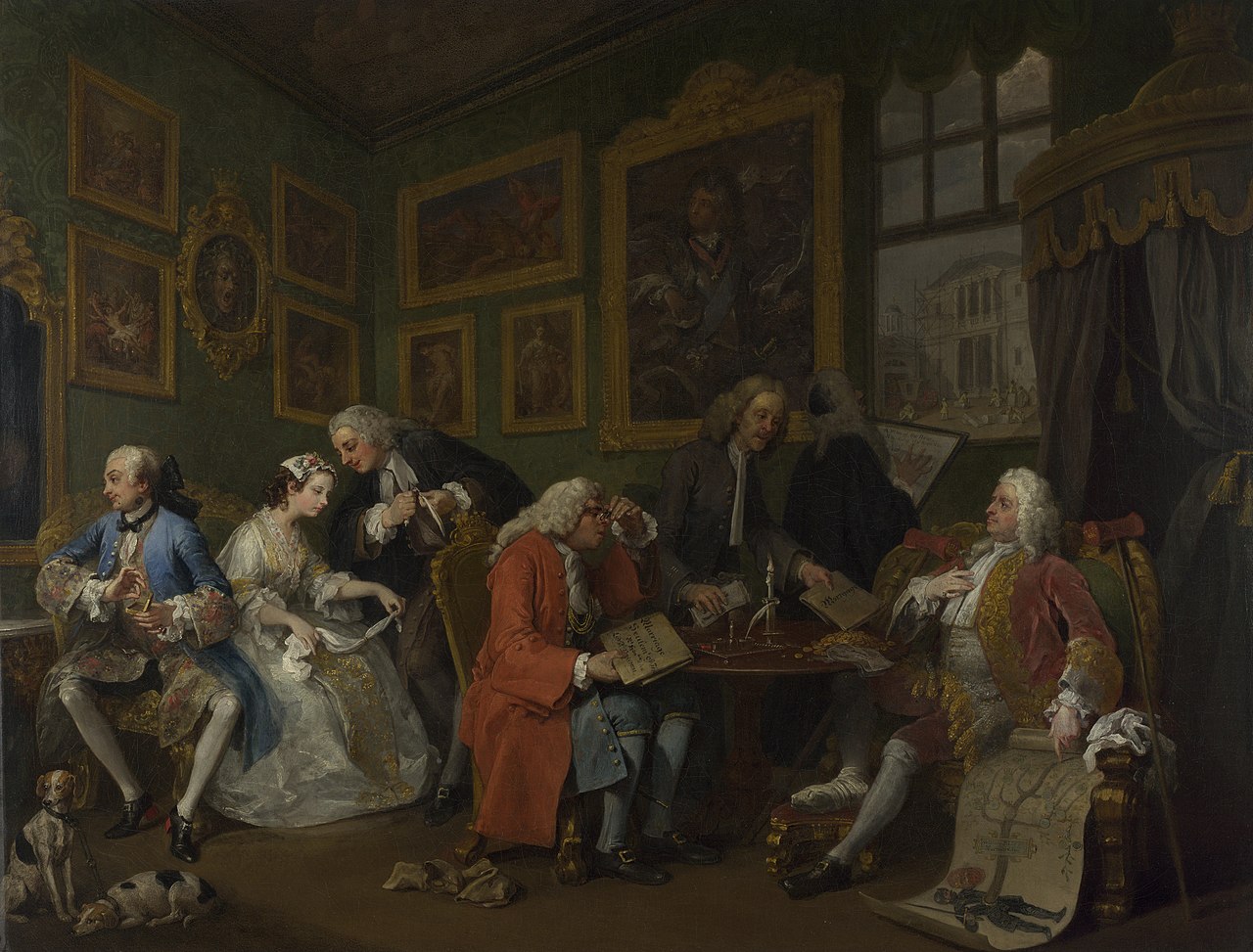
William Hogarth, Marriage A-la-Mode: The Marriage Settlement, 1743. Hogarth used satire to expose the vanity, greed, and social hypocrisy of eighteenth-century British society
This tradition continued into the nineteenth century through political caricature. French artist Honoré Daumier became renowned for his exaggerated portrayals of politicians and public figures. Distorted faces and absurd situations became effective visual weapons against power and corruption.

Honoré Daumier, Gargantua, 1831. The artist’s famous political caricature criticized the excesses of power through sharp visual satire
Modern Art and the Rise of Irony
The twentieth century transformed the role of humor in art. Avant-garde movements embraced irony, provocation, and absurdity as legitimate artistic strategies.
One of the most iconic examples is Marcel Duchamp’s L.H.O.O.Q., in which he drew a mustache on a reproduction of Leonardo’s Mona Lisa. The gesture was humorous, but it also challenged traditional ideas about artistic authority, originality, and the concept of the masterpiece itself. Humor became a means of questioning established conventions and inviting audiences to reconsider what art could be.
Contemporary Art and the Power of Surprise
Today, humor remains an essential part of contemporary artistic practice. Many artists use unexpected materials, absurd scenarios, and playful interventions to engage audiences in new ways.
Whether through unconventional sculptures, interactive installations, or the transformation of everyday objects, contemporary art often relies on laughter as a bridge between artist and viewer. Humor can make complex ideas more accessible while encouraging critical thinking and dialogue.
Far from diminishing the seriousness of art, laughter often deepens its impact.
A Universal Language Across Time
Throughout history, laughter has accompanied the evolution of art without ever losing its relevance. Sometimes subtle and sometimes provocative, humor allows artists to create an immediate connection with their audiences.
Behind every smile, joke, or comic scene often lies a deeper reflection on the human condition. What appears amusing on the surface can reveal profound truths about society, identity, power, and our shared experiences.
Rather than being a minor subject, laughter stands as one of the most universal languages in art history. Crossing cultures, centuries, and artistic movements, it continues to remind us that art is not only meant to inspire thought, but also to celebrate the joy, absurdity, and humanity of life itself.