
- PAINTING
- SCULPTURE
- Esplanade Valéry Giscard d'Estaing 75007 Paris
Musée d’Orsay

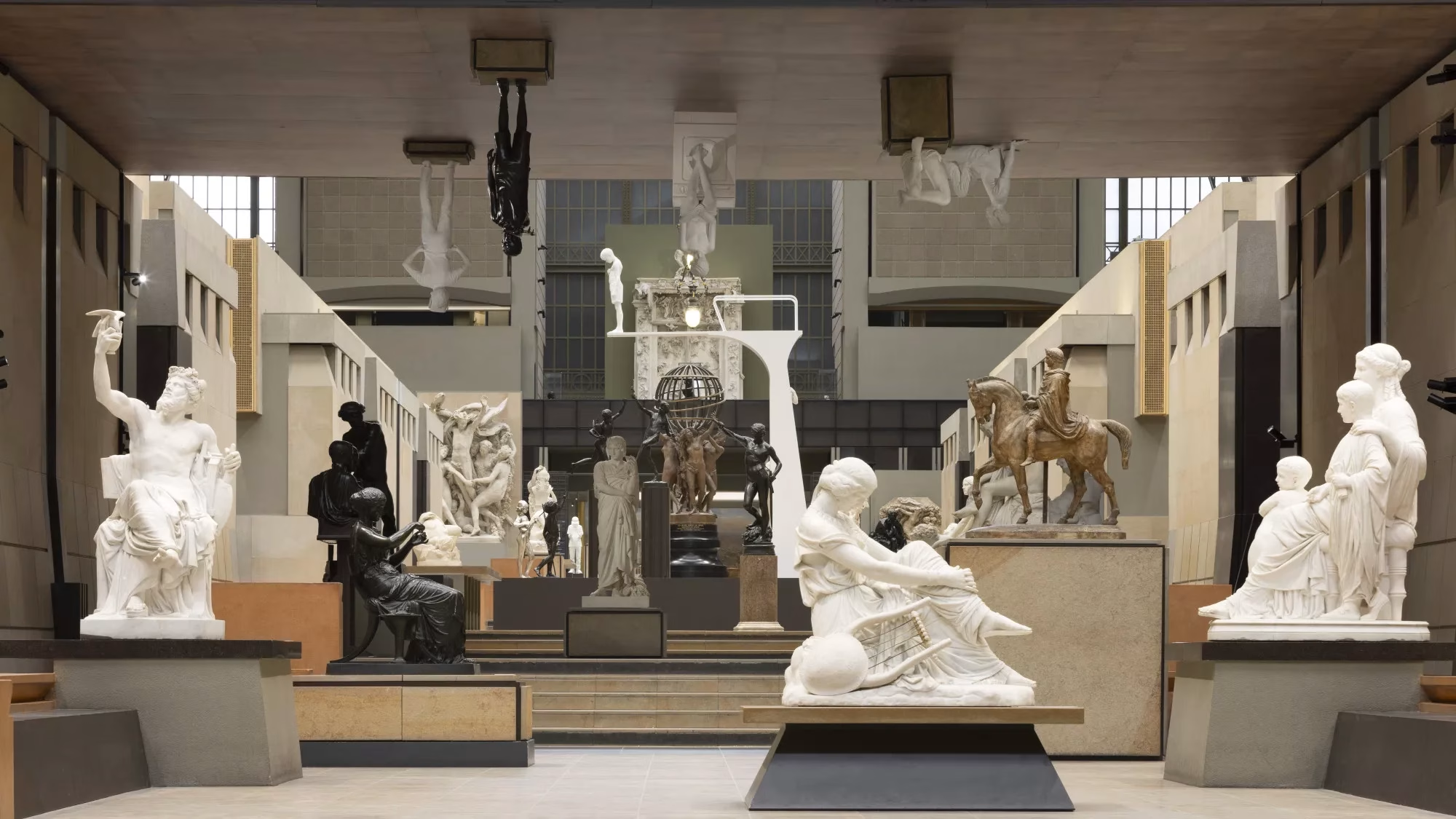
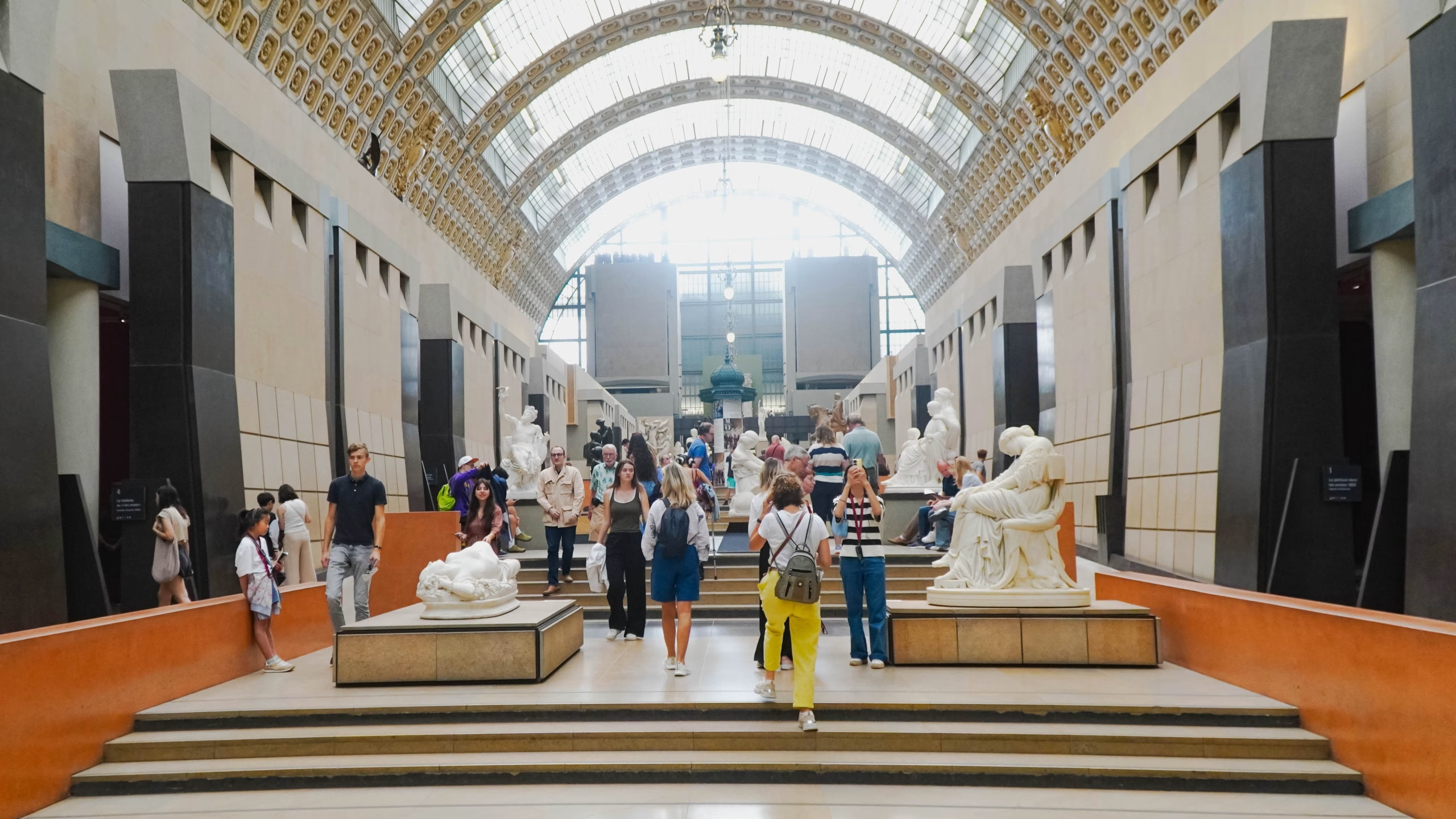
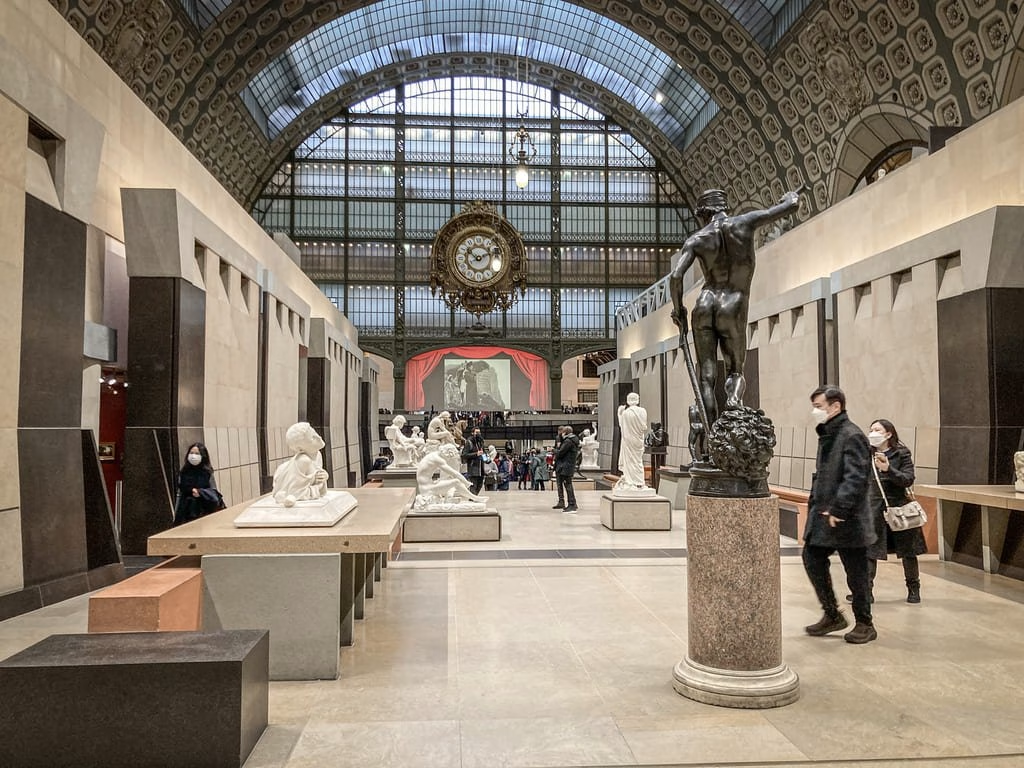
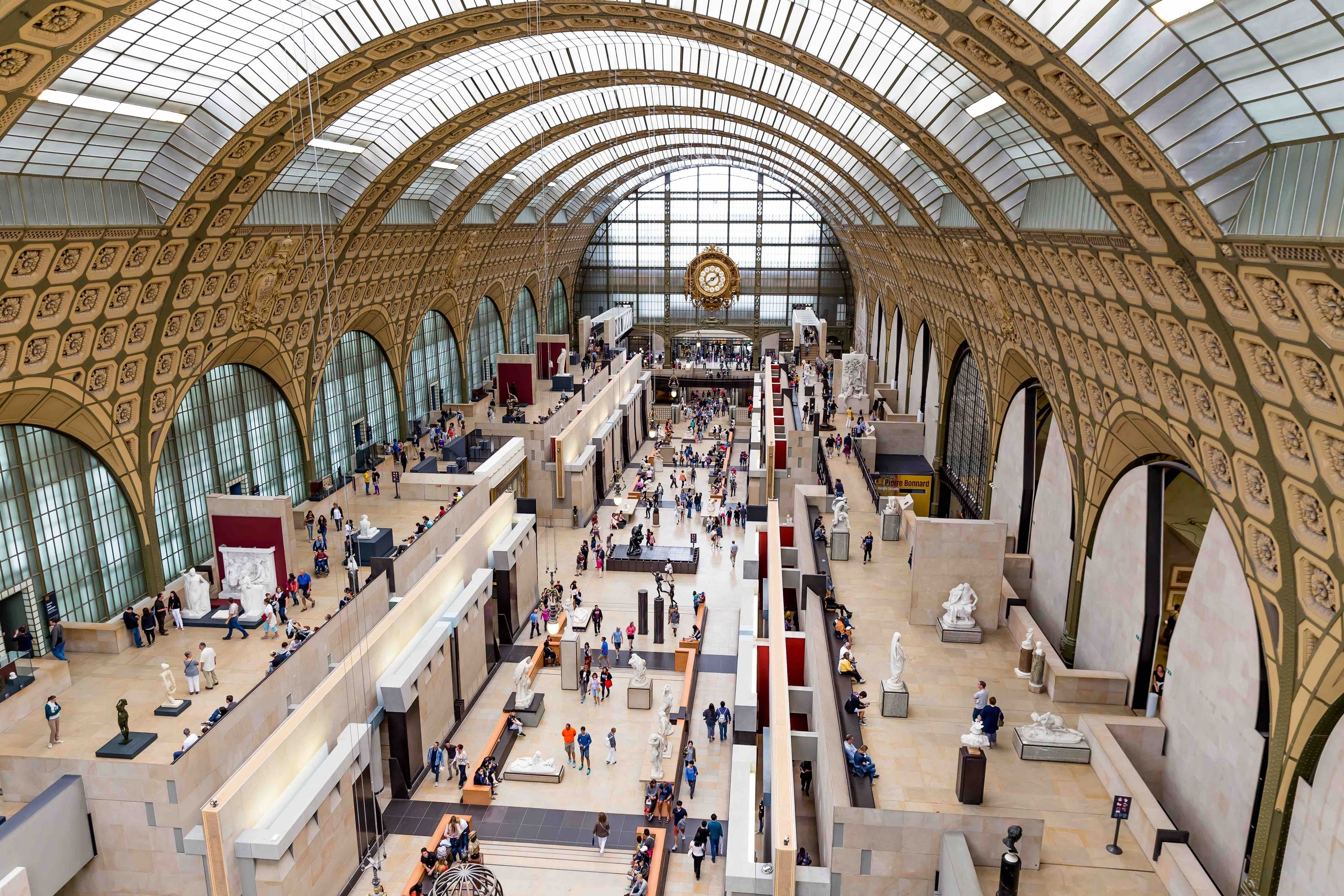
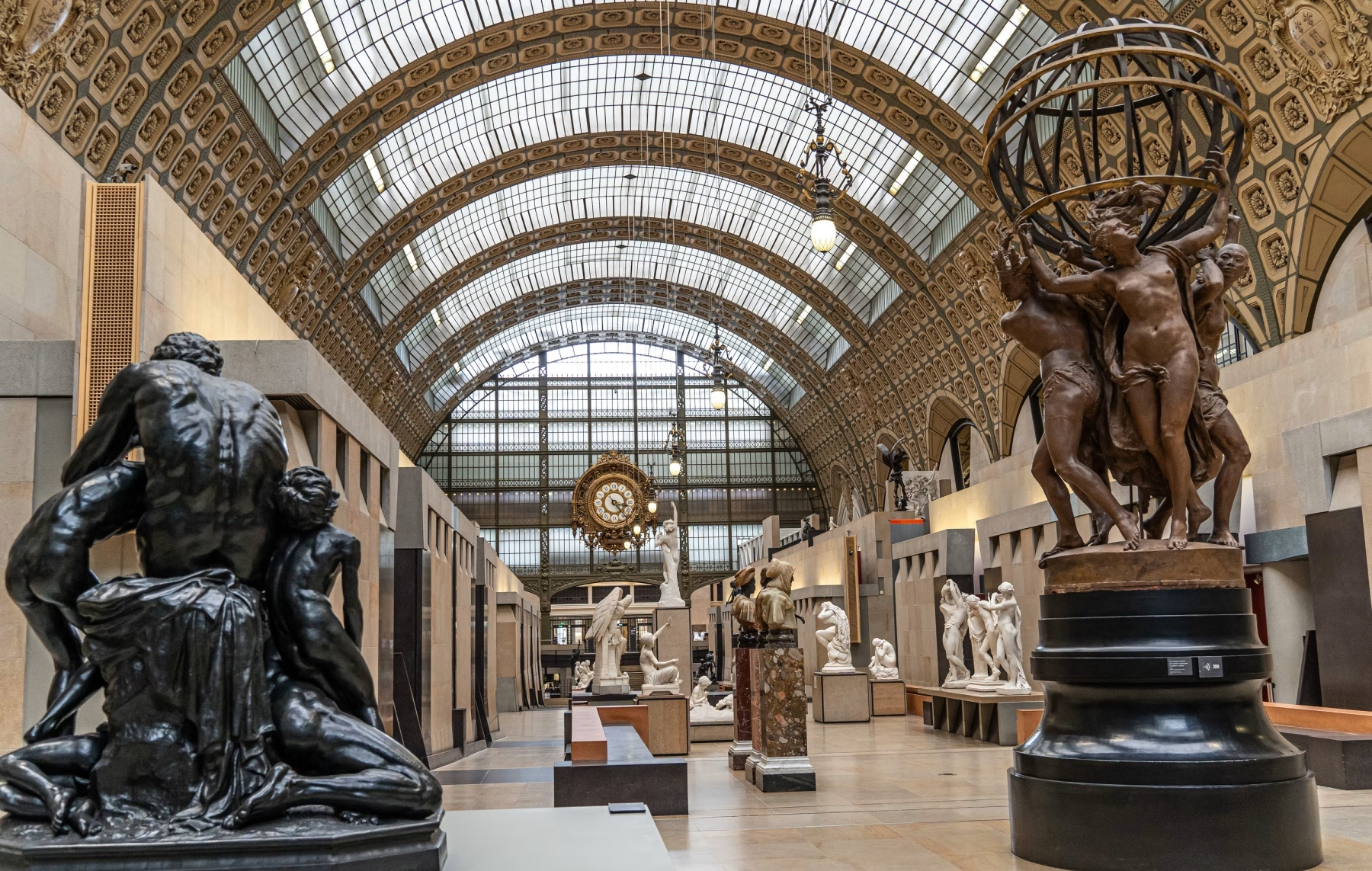
Located on the banks of the Seine in Paris, the Musée d’Orsay is one of the world’s most important museums, particularly renowned for its outstanding collection of art from the 19th and early 20th centuries. One of the museum’s most distinctive features is its historic building, which originally served as a railway station.
From Railway Station to Museum
The building that now houses the Musée d’Orsay was originally constructed as a railway station known as the Gare d’Orsay. Located in the heart of Paris, beside the Seine, the station was completed in time for the 1900 Exposition Universelle. Its design was created by architects Victor Laloux, Émile Bénard and Lucien Magne.
Although the Gare d’Orsay was designed to meet the demands of modern transportation, its architecture combined the aesthetics and construction techniques of the 19th century with the requirements of modern urban life. At a time when Paris was undergoing major transformation under Napoleon III and Georges-Eugène Haussmann, the station became an important architectural expression of the city’s emergence as a modern capital.
The building also reflected the architectural ambitions of the period. Its interior incorporated references to Parisian architecture, urban planning and decoration, including representations of important contemporary landmarks such as the Palais Garnier, designed by Charles Garnier and constructed between 1863 and 1875.
The Transformation into a Museum
Over time, the Gare d’Orsay gradually lost its original function as railway technology evolved. In the 1970s, plans were developed to construct a tunnel approximately one kilometre long beneath the station as part of the RER C railway line, together with a new station beneath the historic building.
During this period, the demolition of the old station and its replacement with a hotel were also considered. However, these plans were abandoned, and in 1978 the building was officially placed on the list of Historic Monuments.
Around the same period, France’s museum authorities proposed transforming the former railway station into a museum. The aim was to create an institution that would provide a chronological and artistic link between the Louvre Museum and the Musée National d’Art Moderne at the Centre Pompidou. The project was approved in 1974, and an architectural competition for the new museum was held in 1978.
The competition was won by ACT Architecture, a team consisting of Pierre Colboc, Renaud Bardon and Jean-Paul Philippon. Their project included approximately 20,000 square metres of new exhibition space.
The interior design of the museum was entrusted in 1981 to Italian architect Gae Aulenti. Rather than replacing the building’s original character, Aulenti incorporated the former railway station’s architecture into the museum’s new design. She redesigned the galleries, furniture, decorative elements and exhibition spaces while preserving the monumental character of the original structure.
On the main level, the stone structures surrounding the former train platforms were used to create a central nave. This arrangement divided the building’s vast interior into more organized exhibition spaces while maintaining the architectural identity of the historic station.
The Opening of the Musée d’Orsay
By July 1986, the museum was ready to receive its collection. The installation of approximately 2,000 paintings, 600 sculptures and numerous other works of art took around six months. The Musée d’Orsay officially opened to the public in December 1986, inaugurated by then-President of France François Mitterrand.
The museum’s collection focuses primarily on art created between 1848 and 1914. It encompasses a wide range of artistic disciplines, including painting, sculpture, decorative arts, photography and architecture, with particular emphasis on Impressionism and Post-Impressionism.
Today, approximately 3,000 works are displayed at the Musée d’Orsay at any given time. The collection includes works by some of the most influential artists in art history, including Claude Monet, Édouard Manet, Edgar Degas, Pierre-Auguste Renoir, Vincent van Gogh, Paul Cézanne, Paul Gauguin, Henri de Toulouse-Lautrec and Gustave Courbet.
A Window onto Parisian Architecture and Urban History
Beyond its art collection, the Musée d’Orsay also explores the architectural and urban history of Paris. One of its notable features is a 1:100-scale model of the Paris Opera and its surrounding area, created by Richard Peduzzi.
Displayed beneath a glass floor, the model offers visitors a unique perspective on the urban development and city planning of 19th-century Paris. It has become one of the museum’s distinctive attractions.
The Marlene and Spencer Hays Collection
Another significant part of the Musée d’Orsay is the collection assembled by American art collectors Marlene and Spencer Hays. Beginning in the early 1970s, the couple built an extensive collection of French art and other works.
In 2016, approximately 600 works from their collection were donated to the Musée d’Orsay. Rather than being dispersed among different exhibitions, the collection was preserved as a unified group. It is particularly important for its representation of Post-Impressionist art.
The collection includes works by Pierre Bonnard, Édouard Vuillard, Maurice Denis, Odilon Redon, Aristide Maillol, André Derain, Edgar Degas and Jean-Baptiste-Camille Corot, among others.
The Musée d’Orsay’s Transformation
As the museum’s collection and visitor numbers have grown, the Musée d’Orsay has undertaken a major transformation project since the 2020s. Known as “Orsay Grand Ouvert”, the project aims to create new galleries and educational spaces while improving the overall visitor experience.
The project has also received significant private support, including an anonymous €20 million donation from an American patron. The contribution was made through the American Friends of the Musées d’Orsay et de l’Orangerie.
Today, the Musée d’Orsay is not only home to one of the world’s most celebrated collections of Impressionist and Post-Impressionist art, but also a remarkable monument to the history of Parisian transportation, architecture and urban development.
The transformation of a former railway station into a major art museum has made the building itself an integral part of the Musée d’Orsay experience. Its monumental architecture, historic railway structure and world-class collection come together to create one of Paris’s most distinctive cultural institutions.
- Car Parking
- Wheelchair
- Wireless Internet
Tags
1 Review
Write a Review Cancel reply
Write a Review Cancel reply
Contact Business
Opening Hours

Switzerland


musee d’orsay