Anselm Kiefer’s Le Alchimiste Opens at Palazzo Reale, Milan, Honoring Female Memory and Transformation
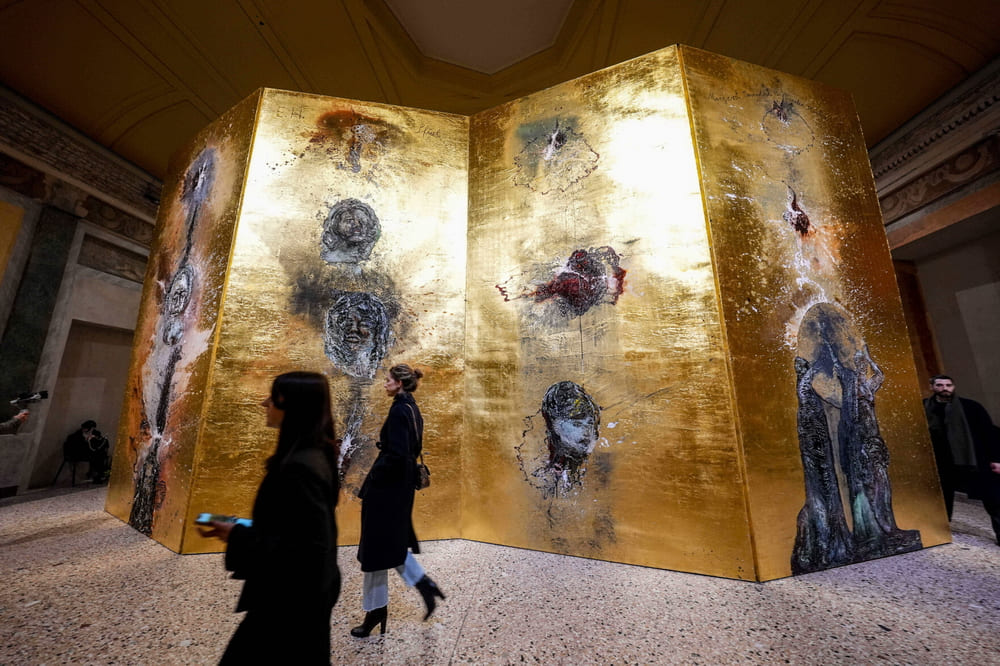
From February 7, 2026, Palazzo Reale in Milan will present Le Alchimiste, a monumental site-specific project by Anselm Kiefer, one of the most influential figures in contemporary art. Installed in the historic Sala delle Cariatidi, the exhibition unfolds as a powerful meditation on female memory, hidden knowledge, and transformation, bridging history, myth, and science.
Curated by art historian Gabriella Belli, Le Alchimiste features a cycle of thirty-eight large-scale canvases conceived specifically for the architectural and symbolic space of the Sala delle Cariatidi. Marked by the scars of the 1943 bombings, the hall stands as a poignant witness to Milan’s history and has hosted some of the most emblematic exhibitions of the 20th century, including the presentation of Picasso’s Guernica in 1953. In this space suspended between ruin and grandeur, Kiefer creates a visual narrative that reflects on destruction, rebirth, and the persistence of memory.
Promoted by the Municipality of Milan – Culture and produced by Palazzo Reale and Marsilio Arte, with contributions from Gagosian and Galleria Lia Rumma and the support of Unipol and Banca Ifis, the exhibition is part of the cultural program associated with the Milan–Cortina 2026 Winter Olympic Games. On view until September 2026, it is among the most anticipated exhibitions of the season.
Following major projects realized for international institutions such as the Grand Palais in Paris and the Venice Biennale, Kiefer returns to Italy with a body of work that interrogates the role of women in the origins of scientific thought and Western culture. Le Alchimiste takes its title from the female alchemists of the Middle Ages and Renaissance—figures often erased from official history—whose experimental practices anticipated key developments in modern science and medicine.
Central to the exhibition is the rediscovery of historical women such as Caterina Sforza, daughter of Galeazzo Maria Sforza, Duke of Milan. Active between the 15th and 16th centuries, Sforza was a scientist, political leader, and author of a manuscript containing over four hundred alchemical, cosmetic, and therapeutic formulas. Alongside her, Kiefer evokes figures including Isabella Cortese, Mary the Jew, Marie Meudrac, Rebecca Vaughan, Mary Anne Atwood, and Anne Marie Ziegler, constructing an alternative female pantheon that challenges traditional historical narratives.
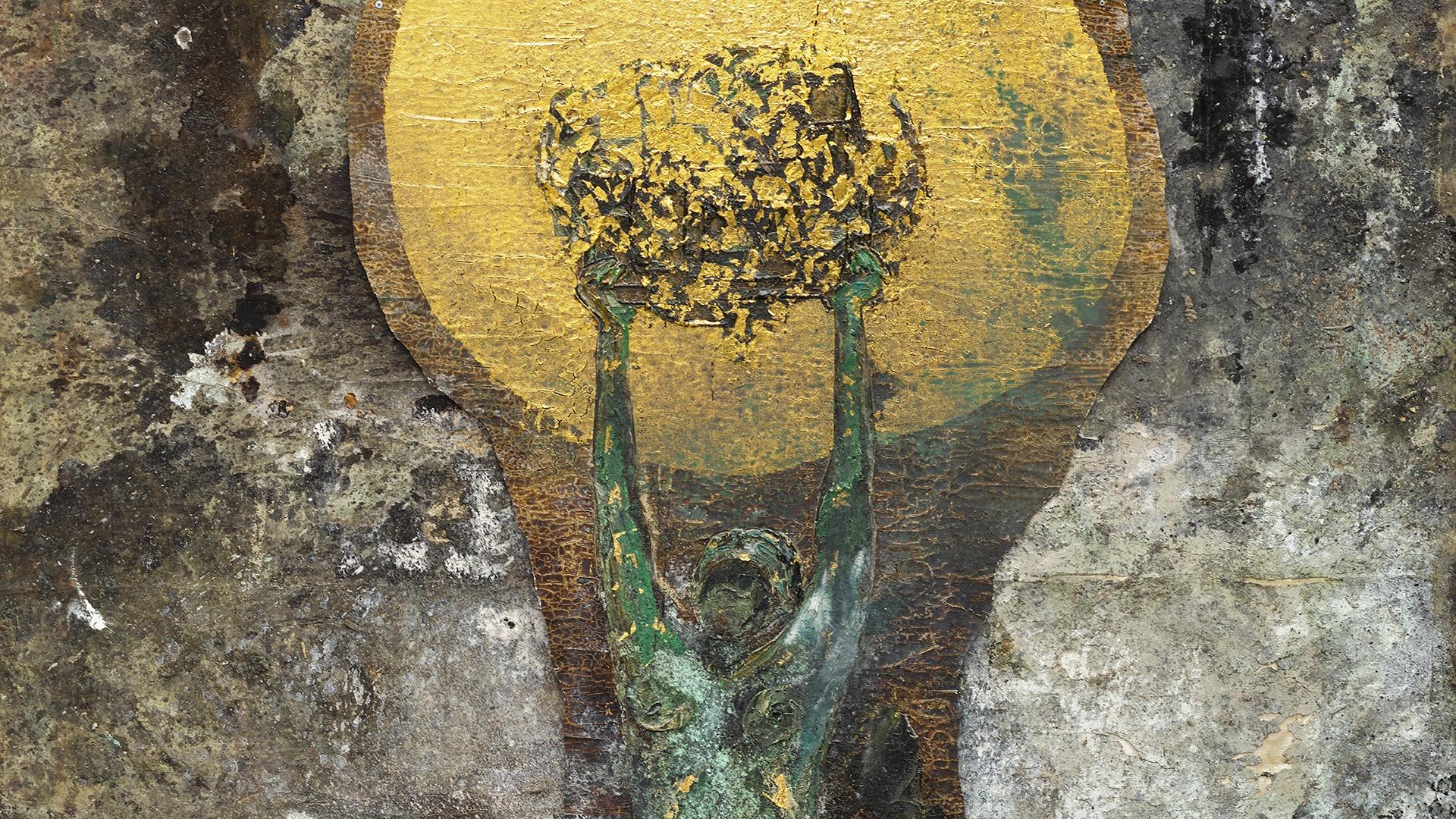
Through his dense, layered, and materially charged painting, Kiefer transforms lead, ash, gold, pigments, and organic residues into carriers of meaning. Faces and bodies emerge from corroded surfaces, evoking cycles of combustion and regeneration, light and darkness, knowledge and oblivion. The works reference the alchemical principle Obscurum per obscurius, ignotum per ignotius (“the obscure through the most obscure, the unknown through the even more unknown”), inviting viewers into a process of introspection and discovery.
In Le Alchimiste, alchemy becomes a metaphor for painting itself: a transformative process in which matter and spirit, destruction and creation, coexist. The figures depicted are not static portraits but presences suspended between materiality and dissolution, embodying intuitive intelligence, discipline, and experimental observation of nature.
Milan plays a crucial role within the project. As a city historically linked to Leonardo da Vinci and Renaissance experimentation, it finds a direct connection to its past through the figure of Caterina Sforza. The choice of Palazzo Reale and the Sala delle Cariatidi reinforces the dialogue between historical memory and contemporary artistic vision, giving the exhibition a dual significance: a tribute to women of science and thought, and a symbolic reactivation of a space marked by fragility and resilience.
The exhibition opens in conjunction with the Milan–Cortina 2026 Winter Olympic Games. The accompanying catalogue, published by Marsilio Arte and edited by Gabriella Belli, includes essays by Natacha Fabbri, Gabriele Guercio, and Lawrence Principe, offering critical perspectives on the relationship between art, alchemy, and the feminine in Kiefer’s work. Admission will be available by online reservation for both individual visitors and groups.